





Antigua and Barbuda could close its citizenship program as early as next month. Caribbean countries have until November 12 to decide what to preserve: their citizenship programs or visa-free access to the Schengen Area.
What Happened?
At a technical meeting on October 19, the EU presented Eastern Caribbean countries with an ultimatum: retain their programs and risk losing Schengen visa-free access, or formally commit to suspending them by November 12. This concerns all five countries operating citizenship by investment programs: Antigua and Barbuda, Dominica, Grenada, St. Kitts and Nevis, and St. Lucia.
Back in June, the European Commission sent letters asking the countries to phase out their programs by June 1, 2028, allowing a 2-year transition period. Now, they have less than 3 weeks to make the decision itself. Whether this would mean an immediate halt to new applications or the start of the same phase-out by 2028 remains unclear.
Why November 12? The European Commission is due to present its visa suspension mechanism report in December 2026. The EU appears to want a clear answer from the countries before then.
Antigua and Barbuda was the first of the five countries to respond publicly to the ultimatum. Prime Minister Gaston Browne said the Cabinet was leaning towards ending the citizenship by investment program.
What Dilemma do Caribbean Countries Face?

- Revenue. According to IMF estimates, the programs generated $700–800 million for the region in 2023. Citizenship programs account for a substantial share of government revenue: Dominica’s program revenue reached 36.6% of GDP in 2022, while St. Kitts and Nevis recorded 22% in 2023. Giving up this income without a replacement would be extremely difficult.
- Visa-free travel. If the countries retain their programs, investors who contributed hundreds of thousands of dollars risk losing one of their passport’s main advantages. According to European Commission estimates, the five countries have issued approximately 107,000 passports through their programs. Visa-free travel to Europe has been a key motivation for applicants.
For Antigua and Barbuda passport holders, the stakes are even higher. Canada has required visas from the country’s citizens since 2017, while the United States partially suspended their entry from January 1, 2026, specifically citing the citizenship program.
The Schengen Area and the UK remain major visa-free destinations, but British access is not guaranteed either: in 2023, the UK introduced a visa requirement for Dominica because of its citizenship program. Losing Schengen access would substantially reduce the passport’s appeal to investors.
Retaining the programs without visa-free access would also be a difficult choice for the countries themselves. A Caribbean passport costing $230,000 or more would be harder to market against Vanuatu, where the cost is $130,000–$165,000 and processing is faster.
Applicants from Iran are either excluded or subject to strict eligibility conditions. Lower prices and revised rules could help sustain demand, but neither would guarantee that revenues remain at previous levels.
However, losing visa-free access does not necessarily mean the end of a program. Vanuatu provides a precedent: the EU suspended its visa waiver in 2022 and permanently removed it in December 2024. Program revenue subsequently fell by just 4%, before increasing by 57% in 2025.
In the first half of 2026, Vanuatu generated a record $95.5 million from its citizenship programs, equivalent to 39% of government revenue, despite having lost visa-free access to both the Schengen Area and the UK.
The possibility that Caribbean countries will retain their programs at the expense of European visa-free access therefore cannot be ruled out.
What Should Caribbean Passport Holders Do?
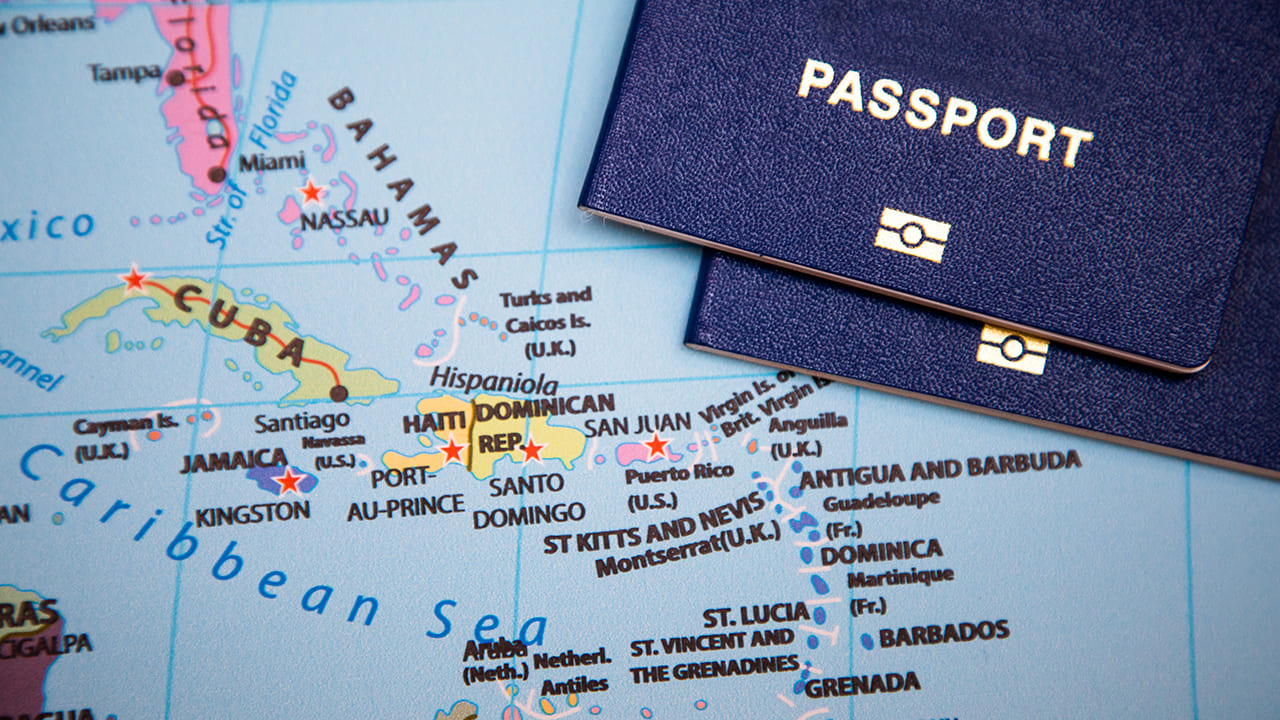
There are two main scenarios:
- Caribbean countries close their programs and the EU retains visa-free access. Existing passport holders would then be able to continue visiting Europe without a visa. However, closing the programs would not itself guarantee that visa-free access remains: the final decision rests with the EU.
- The countries retain their programs but lose visa-free access. Restrictions could affect all citizens, including both local residents and investors who obtained citizenship through investment. The specific conditions would depend on the EU’s decision.
For Caribbean passport holders, the second scenario would clearly be less favorable, directly changing their usual travel arrangements. However, removing visa-free access would not, by itself, invalidate their passports or revoke their citizenship.
What Solution Could You Consider?
One way to reduce exposure to visa policy changes is to complement a second passport with residency in a Schengen country. If you already hold a Caribbean passport, obtaining Greek residency through investment could be your next step.
A visa-free passport and a residence permit offer different opportunities. The passport allows short visits to the Schengen Area without applying for a visa in advance. The Greek Golden Visa gives you the right to live in Greece and make short visits to other Schengen countries. These rights derive from your residence status and do not automatically disappear if visa-free access is withdrawn from your country of citizenship.
A residence permit also allows you to plan longer stays in Greece, your children’s schooling and everyday life, subject to local rules governing access to banking, healthcare and other services.
If you already hold a Caribbean passport, you can explore applying for Greek residency. If you do not yet have a second citizenship, one option is to obtain Vanuatu citizenship before applying for the Greek Golden Visa. Before proceeding, it is important to assess your eligibility, taking all citizenships into account.
Whether you already hold a Caribbean passport or are considering a route through second citizenship, Astons specialists can assess your circumstances, explain the available options and help plan your next steps. Contact us for a free consultation.