
































 +44 207 043 6026
  +357 252 30233
  +971 454 01311
  +902 129 008 710
  +302 112 340 656
  +1 (888) 2033901


Best Places to Invest in Real Estate
-
 15-minute read
 -
1,162 views
-
Share
 15-minute read
 1,162 views
 Share
Share
Susanna Uzakova
Senior Citizenship & Residency Advisor
- Last edited: April 29, 2026
The global real estate market continues evolving, with certain destinations standing out as particularly attractive for property investors in 2025. While traditional markets like Spain and Portugal remain solid choices, emerging opportunities in Greece, Turkey, and the UAE are drawing increased attention due to their combination of favorable investment conditions, residency benefits, and strong growth potential. In the following sections, we’ll analyse these top markets in detail, examining everything from purchase prices and rental yields to visa benefits and tax implications.
To make an optimal investment decision, you need to evaluate several key factors: the country’s economic situation, current legislation, potential for price growth, and rental yield. The primary goal is to choose a country that aligns with your investment objectives.
When choosing a destination, consider:

There’s no universally “best” country — your choice depends on your objectives and priorities. Europe offers stability, quality of life, and infrastructure, while other regions may deliver lower entry costs, exotic appeal, and higher yields.
Foreign interest in Greek property is surging: over the last two years, the net inflow reached nearly €5B. Prices across the country rose 6.6% in 2024, and more than 60% over the past decade, driven primarily by Athens and Thessaloniki.
Rental rates are increasing in almost all regions, yet property prices in Athens remain competitive compared to other European capitals. In central Athens, one square metre averages €2,300–3,000, while renting a one‑bedroom flat costs €650–1,000 per month. Additionally, no VAT applies on primary real estate transactions — buyers only pay a 3.09% transfer tax.
Greece’s Golden Visa programme grants a 5‑year residence permit to investors and their families. This permit remains valid as long as the property is retained, with no minimum stay requirements. Long‑term rentals typically generate 4–6% annual yields.
The country is split into 2 investment zones:
A lower €250,000 threshold is available in two cases, regardless of location or property size:
These properties are most prevalent in Attica and Athens, enabling investors to access Golden Visa residency at the minimum cost in Greece’s most sought-after area.
Another notable advantage is Greece’s non-dom tax regime: investors can opt to pay a flat €100,000 annual tax on worldwide income, often more favourable than the standard progressive rate of up to 44%.
The Cyprus real estate market maintains steady growth: in 2024 the number of transactions increased by 4–15% across regions, and prices rose by 4–8%. The most popular areas remain Larnaca, Limassol, and Paphos: the average price per square metre in Paphos is €1,800, in Limassol €4,200, and in Larnaca €2,300. For comparison, in the capital Nicosia, prices start at €2,500 per square metre. Foreign buyer interest in coastal and resort properties supports the upward price trend amid falling inflation (below 3% annually).
Cypriot property guarantees stable rental income of 4–8% annually. The standard VAT rate for primary market purchases is 19%. It can be reduced to 5% if certain conditions are met and the property is used solely for personal residence, not rented out.
Experts expect the market to retain positive dynamics in 2025: demand growth is stimulated by the continuation of the Golden Visa programme.
Investors purchasing property worth at least €300,000 can obtain permanent residency.
Primary market properties can be purchased directly from developers; the property can be rented out.
Applicants must demonstrate an insured annual income of at least €50,000 plus €15,000 for each adult family member included in the application and €10,000 for each minor. Residents benefit from favourable tax conditions that significantly reduce the tax burden. Also, there is no requirement to live permanently in Cyprus — it is sufficient to visit at least once every two years.
Permanent residency is unlimited in duration and applies to all family members of the main applicant. The average processing time is 8–9 months.
Potential accession of Cyprus to the Schengen zone will increase property liquidity and boost the entire market.
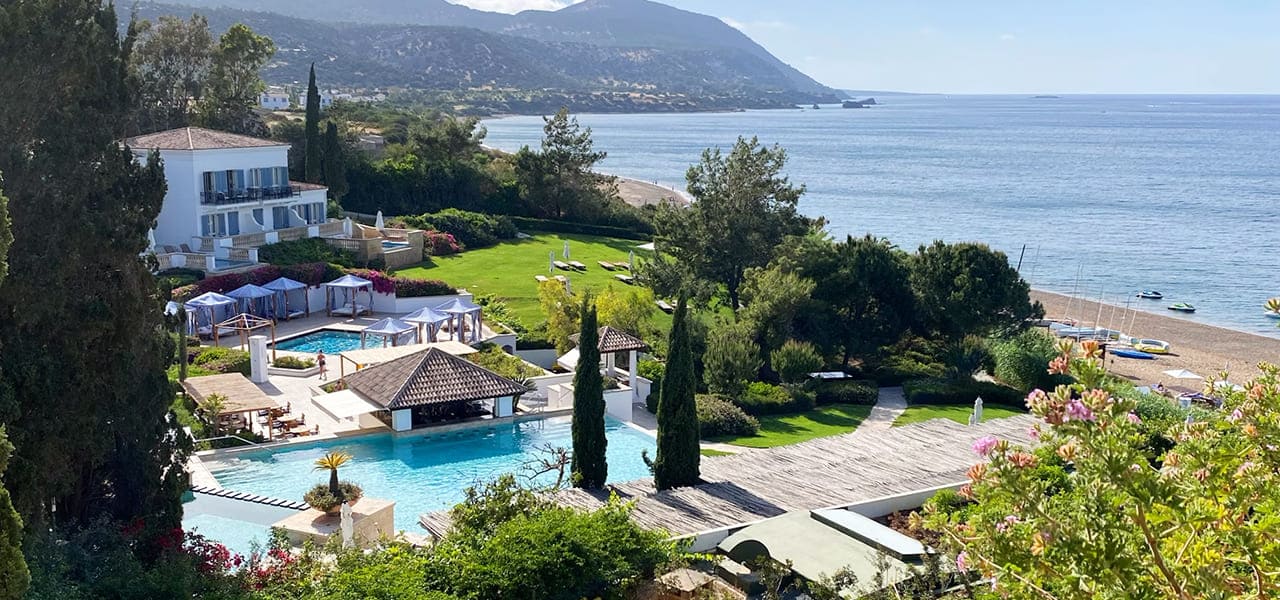
The Maltese real estate market grows steadily: in 2023 prices increased by 7.5%, in 2024 by 6.7%. The growing number of foreign workers and tourists increases demand for private housing, which in turn attracts foreign investors.
The government actively supports demand: programmes exist for first-time and repeat buyers, special conditions for properties located in urban SDA zones and Gozo, grants to compensate restoration costs. The country offers a favourable tax system with minimal taxation on worldwide income and zero inheritance tax.
An important factor is Malta’s permanent residency programme. Resident status is granted to the main applicant, spouse, children up to 28 years old, parents and even grandparents. The minimum investment amount under the programme is €182,000.
There are two ways to obtain residency:
Processing times are 6–8 months. Residency status can be renewed every five years without restrictions.
Until recently, it was possible to obtain citizenship in Malta through investment of at least €690,000 after 1–3 years of residence, but in late April 2025, the EU Court suspended the programme.
Turkey is one of the most popular destinations for property purchase: in 2024 alone, sales volume increased by more than 20% compared to the previous year. The share of property sales to foreigners from total annual sales is about 1.1%. Prices continue to grow: in 2024 the increase was nearly 25% nationwide. Significant annual price growth was recorded in leading cities: Ankara +38.6%, Izmir +32.5%, Istanbul +30.7%. At the same time, the average payback period for investments is 14 years, with a yield of about 7%.
In addition to high profitability, investors are attracted by more transparent financial operations, simplified purchasing conditions, active urban modernisation, improved infrastructure, and more comfortable business conditions. For example, the law limiting rent increases to 25% per year was repealed in July 2024, and the ban on concluding sales contracts in foreign currency was lifted in March 2025.
There are also investment residency and citizenship programmes in Turkey. With a property purchase cadastral value of $200,000, an investor and their family can obtain a 2-year residence permit with the right of further renewal; at $400,000 or more, a Turkish passport can be issued.
Buyers can choose where to invest — multiple properties, residential or commercial, can be purchased. Properties may be rented out, used for business, as personal residence, or sold after 3 years — this will not affect residency status. The Turkish passport is internationally recognised and opens opportunities for business, travel, and opening bank accounts. The average processing time is from 8 months. Payment of purchase can be made with cryptocurrency income: Turkey has no strict compliance or source-of-funds verification. There are no residency requirements; documents can be legalised remotely.

The agency Moody’s confirmed the Emirates’ high credit rating at AA2, and inflation in 2024 remained moderate — just over 3%. Demand for new residential and commercial real estate is actively growing in the UAE. In 2024, the number of transactions increased by 30%, and prices rose by an average of 10%. The most popular cities for investment are Dubai and Abu Dhabi.
Investors are attracted by the wide choice of new housing, as well as the simplicity and speed of transaction processing. Additionally, it is possible to pay for real estate in the UAE using cryptocurrency. The property transfer fee ranges from 2-4%, depending on the emirate.
In the UAE, purchasing property can grant residency status in just a few weeks, immediately for the whole family — spouse, children of any age, and parents. For purchases from $204,000, a 2-year visa is issued, which can be extended; for purchases from $545,000, a Golden visa valid for 10 years with renewal options is granted. In both cases, the property must be only in specific freehold areas. Visa holders are not required to reside permanently in the UAE.
Property prices in Bangkok, Phuket, and Pattaya are growing steadily but not rapidly: an average of 3% in 2024. The average price per square metre is €1,800–3,000 depending on location. Rental yields range between 3–4% per annum.
Thailand is an excellent holiday destination: the tourist season lasts year-round and is little affected by seasonality. Expats and foreigners coming for “wintering” often choose the country; besides the climate, they are attracted by relatively low living and rental costs. Many foreigners come to study, work, or do business. Property in Thailand can be acquired as full ownership (freehold) or via long-term leasehold for up to 90 years. Ownership can be of a condominium apartment or a villa, but the land under the villa is registered as a long-term lease. Apartments in buildings are registered under one owner and then re-registered to each buyer.
Investors who invest $500,000 or more in property can obtain an LTR visa — an analogue of residence permit valid up to 10 years. To qualify, they must confirm assets of at least $1 million or an annual income of at least $80,000 over the past two years. After three years of legal residence, permanent residency can be applied for, and after another five years, Thai citizenship.
Caribbean countries are popular among foreigners buying property abroad: wealthy retirees choose the Caribbean for winter holidays, investors buy apartments and villas for rent. Property prices grow steadily at 3–5% per year. Rental demand increases 1.5–2 times in the high season compared to winter months, and yields reach 4–5% per year. Most countries offer fairly lenient tax conditions, with excellent holiday opportunities, beautiful nature, and reasonably developed infrastructure.
The main advantage of buying property in the Caribbean is citizenship programmes allowing an investor and family members to obtain passports.
Entry thresholds and participation conditions vary: for example, in Grenada, the minimum property cost is $270,000 plus additional fees of $50,000 and $25,000 per family member on the application. In Dominica, the threshold is $200,000 plus a $75,000 government fee for the main applicant and $100,000 for a family of up to four persons. Property in Saint Lucia and Antigua and Barbuda under the investment citizenship programme costs $300,000.
Besides property options, programmes include non-refundable contributions to approved funds or the economy. Caribbean “golden passports” allow visa-free travel worldwide, including the Schengen zone, and do not require permanent residence. Investors are also attracted by soft tax conditions: no tax on worldwide income, dividends, inheritance, or gifts.

For those seeking to minimise initial costs, countries with the lowest property prices are of interest. Here, however, it is important to remember the balance between price and other factors such as economic stability, safety, and price growth potential.
Often, the most affordable options can be found in Eastern Europe, South America, or Southeast Asia. For example, in Hungary and Bulgaria, affordable housing options are available both outside large cities and in popular tourist regions, while maintaining a fairly high standard of living in a European country. In Argentina, despite economic difficulties, inexpensive properties with good yields can be found.
Investors focused on profit seek destinations with high yields. This does not always mean the cheapest countries: good returns may come from markets with stable rental demand, especially in tourist centres or large cities with developed economies. It is also worth paying attention to countries with growing economies and developing infrastructure, where property prices have higher growth potential.
In the USA, for example, “second-tier” cities with growing economies such as Austin or Nashville show steady population and economic growth, leading to high rental demand and price increases. Germany, with cities that have developed industry and universities, such as Munich, Frankfurt, and Hamburg, offers stable rental demand, especially from students and young professionals.
The UK, despite being known for high prices, offers investors opportunities for good returns, especially in major cities like London or Manchester, thanks to developed infrastructure and high business activity.

People buy foreign property for different reasons. For some, it is a way to preserve money amid global market instability. Others see it as a way to obtain a visa or residence permit. And some just seek a home for themselves, dreaming of living in another country.
When planning to buy property abroad, it is important to consider not only the purchase price but also associated costs. Taxes play a key role: purchase tax, annual property tax, capital gains tax from sale or rental income.
Rates vary significantly between countries, so it is necessary to find out in advance what taxes you will pay and how they will affect your profit. Also, if you plan to live in the purchased property, visa requirements and residence permit rules must be considered. In some countries, buying property can simplify visa acquisition or lead to obtaining a new immigration status — residence permit, permanent residence, or citizenship; in others, it offers no such benefits.
Besides taxes and visa issues, other mandatory expenses include legal and notary fees, property insurance, utilities, and maintenance costs.
Purchasing property for rental purposes is aimed at generating stable passive income. This decision allows you to receive a regular cash flow from rental payments, which are indexed for inflation and protect the investor from asset depreciation. Additionally, the property may appreciate in value and bring extra profit upon possible resale. However, the investor must manage the property, find tenants, and handle current issues, as well as consider risks of vacancy, dependence on economic conditions, and seasonality of demand. Some management companies may take over property management for a certain fee.
Flipping involves purchasing property with the subsequent resale at a higher price. With successful execution, it is possible to obtain quick and significant profit. At the same time, such investment carries high risk since success depends on the right choice of property, quality of renovation, and overall market situation. Furthermore, the investor needs specialised knowledge and skills, as well as readiness for high transactional costs.
The optimal strategy depends on the investor’s goals, experience, and risk tolerance.
In 2026, choosing promising real estate investment destinations is not a universal decision but a path depending on your individual goals and risk appetite.
If your priority is stable income and long-term growth, select markets with developed infrastructure and stable economies: typically, they offer more conservative but reliable investments. Meanwhile, investors willing to take higher risks can find profitable opportunities in emerging markets or niche segments such as eco-friendly construction or coliving. In any case, for successful investments, it is necessary to clearly understand your goals and carefully analyse the chosen market.
One of the most effective solutions is countries offering immigration status for investments — residence permits or citizenship. This option provides additional advantages and expands your personal freedoms.
Astons has been successfully operating in the investment immigration and foreign real estate sector for over 30 years.

 Learn more
Request a Free Consultation
Book a free consultation today and let our specialists help you choose the best country for your family
Send a RequestConsider your investment goals (living, rental income, resale, immigration benefits), the economic stability of the country (GDP, inflation, currency), legal restrictions for foreigners, local real estate market trends, infrastructure and neighborhood development plans, property type, climate and location suitability, rental yield potential, and the overall market growth prospects. Also, factor in taxes, visa and residency regulations, and management responsibilities.

Susanna Uzakova
Senior Citizenship & Residency Advisor
Markets with stable demand for rentals, especially in tourist hubs or economically developing cities, tend to offer higher rental yields. Turkey offers rental yields around 7%, Caribbean countries yield 4-5%, Cyprus and Greece provide 4-8% and 4-6% respectively, while markets like the US cities with growing economies also show promising rental income. Thailand offers 3-4% yields.
Susanna Uzakova
Senior Citizenship & Residency Advisor
Taxation varies widely: it may include purchase taxes, annual property taxes, capital gains, and income tax on rental revenue. Some countries offer tax incentives or reduced VAT rates (e.g., Cyprus offers reduced VAT under certain conditions). Others have flat or progressive tax systems affecting overall profitability. Non-dom regimes (like in Greece) can reduce tax burdens for wealthy investors. It’s critical to understand all applicable taxes in the target country before investing.
Susanna Uzakova
Senior Citizenship & Residency Advisor
Countries with stable economies, developed infrastructure, and strong legal protections for foreign investors are generally safest. Greece, Cyprus, Malta, UAE, and parts of Europe like Germany and the UK are stable and reliable markets with transparent processes and growing demand.
Susanna Uzakova
Senior Citizenship & Residency Advisor
Financing options depend on the country. Some banks offer mortgages to foreigners but often with stricter conditions and higher interest rates. Cryptocurrency payments are accepted in places like the UAE and Turkey, which may provide alternative financing means. Consulting local experts is advised.
Susanna Uzakova
Senior Citizenship & Residency Advisor
Emerging markets include cities in Turkey (Istanbul, Ankara, Izmir) with rapid price growth and improved business environment, Caribbean countries offering citizenship programs, and select “second-tier” US cities like Austin and Nashville with economic growth driving real estate demand. Niche segments like eco-friendly construction and coliving spaces are also highlighted as emerging opportunities.
Susanna Uzakova
Senior Citizenship & Residency Advisor
It is recommended to work with experienced experts who understand local laws, market conditions, and have a track record in international real estate. Agencies like Astons with decades of experience can provide comprehensive services, including legal support, financing advice, and management assistance, helping to avoid pitfalls and ensure smooth transactions.
Susanna Uzakova
Senior Citizenship & Residency Advisor
Author

Susanna Uzakova
Senior Citizenship & Residency Advisor
Suzanna Uzakova is an international specialist and a leading expert at the company in the field of investment immigration.
Learn more about the authorShare


Related Articles
schedule a Meeting
Let’s Discuss the Details
Our expert will create a tailored solution based on your needs within 24 hours.
Susanna Uzakova
Senior Citizenship & Residency Advisor
 Your Data is Protected
Your information is handled under strict privacy policies.