





























 +44 207 043 6026
  +357 252 30233
  +971 454 01311
  +902 129 008 710
  +302 112 340 656
  +1 (888) 2033901


Citizenship of Argentina — Benefits for Families
-
 10-MINUTE READ
 -
2,067 views
-
Share
 10-MINUTE READ
 2,067 views
 Share
Share
Susanna Uzakova
Senior Citizenship & Residency Advisor
- Last edited: October 6, 2026
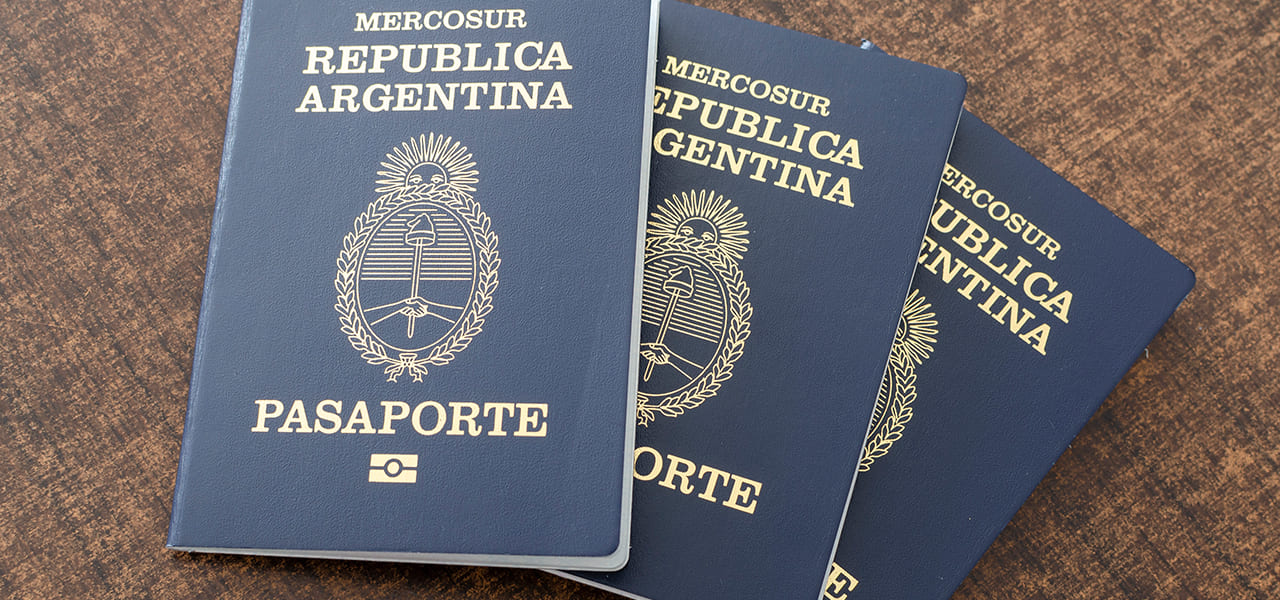
Argentina offers one of the world’s strongest passports, granting broad international mobility and regional advantages. Citizenship can currently be obtained after two years of uninterrupted legal residence, and the country’s upcoming CBI program is expected to further simplify access for investors and their families.
For families considering relocation or strategic citizenship planning, this guide details:

Culture and Heritage
Argentina is the most European country in Latin America, with strong cultural heritage and family values. Buenos Aires is often called the “Latin American Paris.” During the economic boom of the early 20th century, Argentina was one of the world’s wealthiest countries and brought in leading European architects to shape the city. The majority of the population descends from Spanish and Italian immigrants.
Child-Friendly Society
Children are highly valued in Argentine society. Streets, parks, and public spaces are welcoming, and social interactions often show genuine respect for families. Argentinians regard children’s needs seriously, creating a nurturing environment for rasing a family.
Welcoming Immigration Policy
The Constitution guarantees every newcomer the right to integrate. Argentina was built by immigrants and remains one of the most welcoming destinations for foreign families.
Healthcare System
Argentina offers strong medical care and pharmaceuticals, available free of charge to citizens and legal residents. The public healthcare system provides treatment for serious illnesses, including cancer. For a higher level of comfort, many families choose private medical insurance.
Quality of Life and Climate
From tropical jungles to snow-capped mountains, Argentina offers a wide range of climates and lifestyles. Buenos Aires enjoys mild winters, rarely falling below +4°C, while Mar del Plata offers scenic Atlantic coastal living. The country combines modern infrastructure, international-standard schools, shopping, and cultural amenities, providing a high standard of living.
Cost of Living
Despite price increases, Argentina remains significantly more affordable than major European capitals. Services and rent are relatively inexpensive, although imported goods and electronics are 1.5–2 times more expensive than in neighboring countries. Locals often solve this through buyers and delivery forwarders.
Global Mobility
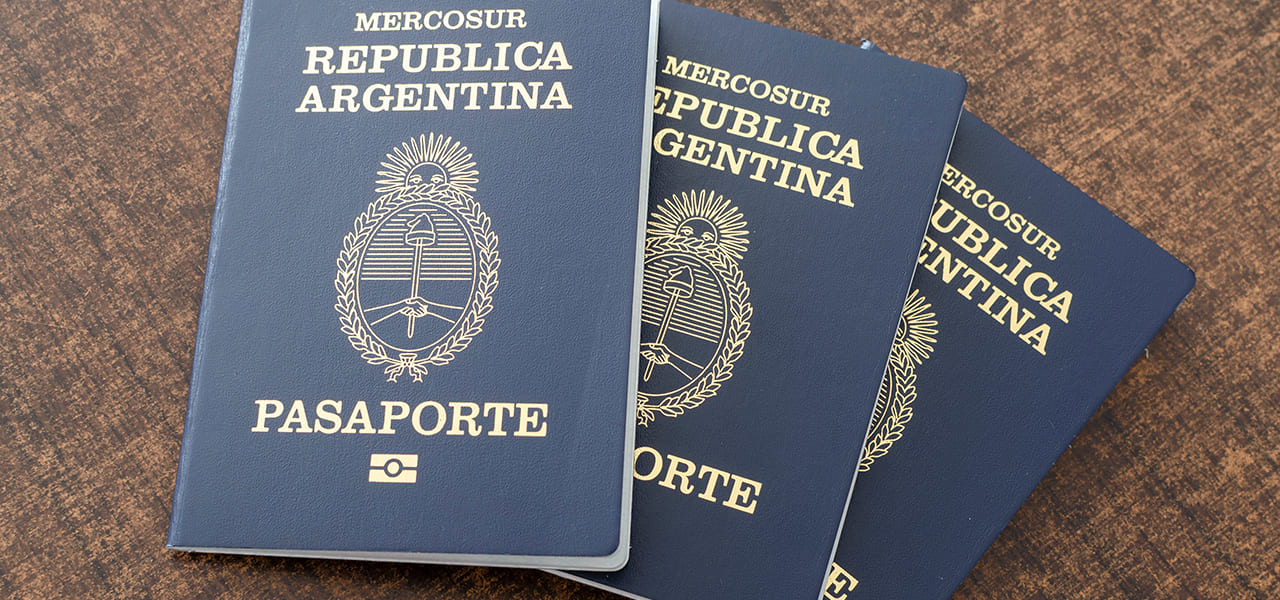
The Argentine passport provides visa-free or visa-on-arrival access to nearly 170 countries, including the EU, UK, and Japan. Citizens can obtain a 10-year U.S. visa or investor visa, and can secure residency in any MERCOSUR country (Brazil, Uruguay, Colombia, Ecuador, and others) with minimal bureaucracy.
Family members of Argentine citizens (spouses, adult children, and parents), can obtain permanent residency, offering nearly all the advantages of citizenship, except voting rights. Residents benefit from:
As noted above, obtaining Argentine citizenship through ordinary naturalisation requires two years of continuous lawful residence in the country without travelling abroad. DNU 366/2025, published on 29 May 2025, removed the previous exemption for spouses and parents of Argentine citizens by birth. Such family ties alone therefore no longer exempt applicants from the two-year residence requirement.
Argentina offers a variety of residency options for foreign nationals in 2026, catering to families, investors, students, and professionals. Legal residence allows you to live, work, study, and integrate into Argentine society.
Key pathways include:
Applications must be submitted via the official Immigration Service portal within 90 days of legal entry. Recent regulatory updates have tightened eligibility rules, so full compliance is strongly recommended to avoid complications.
Permanent residency is available to:
You must provide documents proving your eligibility: marriage certificate, child’s birth certificate, or other proof of a close family relationship.
For applicants with passive income abroad: rental income, dividends, pensions, etc.
Requirements:
Income thresholds:
As of September 2026, 1 minimum salary equals ARS 383,800 (approx. $252), but the exchange rate fluctuates. If income requirements are not maintained at renewal, the permit may be denied.
Popular among those without other grounds. Requires enrollment in an accredited program lasting at least three years. Short courses only qualify for a transit visa, not residency. The permit is issued for 1 year and must be renewed with academic records.
Eligible institutions include:
Adult evening schools do not qualify.

Applicants must have a legitimate employment contract with an Argentine company. Random inspections ensure compliance; fraudulent employment may lead to residency cancellation.
Granted in cases of proven political, ethnic, or other persecution. Processing takes 2–3 years. Every exit must be reported to immigration authorities.
Note: Medical treatment visas and Digital Nomad visas do not qualify as legal residency.
Applying for Argentine residency requires careful preparation of official documentation. Submitting complete and certified documents ensures smooth processing and avoids delays.
Essential Documents:
Certification Requirements:
All foreign documents must be apostilled, translated by an accredited translator, and certified by the translators’ association.
Proof of Address (Domicilio):
Applicants must provide a domicilio within Argentina. This is typically a rental agreement submitted to the local police station. In some districts, two Argentine witnesses may need to confirm your residence.
Application Submission:
Applications are submitted online via the Immigration Service portal.

As of September 2026, citizenship applications are processed by the National Immigration Service. Previously, cases were handled by courts and could take 7 months to 2.5 years.
Eligibility Requirements:
Decree 366/2025 issued by President Javier Milei confirms that investors may obtain citizenship without meeting residency requirements. The exact launch date remains unknown.
Citizenship applications are submitted electronically. Required documents:
| Document | How to Obtain |
|---|---|
| DNI (residence card) | Issued by Immigration Service after obtaining residency |
| Argentine police clearance | Ordered online through the national government portal |
| Proof of income/occupation | Evidence of stable means of living in Argentina |
| CUIT/CUIL | Local tax/social security ID, obtained online after receiving DNI |
| Birth certificate (new format) | It is necessary to provide a certificate in A4 format with an apostille. |
| Police clearance from country of origin with apostille | Can be obtained in the Ministry of Internal Affairs |
Tips for a Smooth Applications:
While Argentine citizenship and residency offer significant benefits, families should be aware of potential challenges and plan accordingly.
Argentina remains in a challenging economic transition. Inflation, which reached 300% in prior years, has slowed significantly in 2026, but the peso remains volatile.
Processing times are often unpredictable and depend on human factors at various agencies. Previously, two courts could issue opposite decisions on identical cases. Official deadlines are not always respected.
Spanish is the primary language for business, legal matters, and daily life. While many Argentinians have studied English, conversational proficiency is limited outside major urban centres. Families should consider language training to ensure smooth integration.
Tips to Mitigate Challenges:

On 2 October 2026, the Argentine government announced the terms of its citizenship by investment program.
Applications are expected to open in Q4 2026. Two participation options are available:
Family members will also be eligible for additional contributions:
The program’s legal framework was established by Decree 366/2025 of 29 May 2025. Decree 524/2025, published on 31 July, set out the application review procedure. The investment route exempts applicants from the standard requirement to reside in Argentina for two years before applying.
Applications will be accepted by the Agency for Citizenship by Investment Programs under the Ministry of Economy.
It will assess whether investments meet the established criteria and coordinate comprehensive due diligence, including:
According to the government, the procedures will take into account OECD and FATF recommendations on financial transparency and risk management. The relevant government authorities will participate in these checks.
Following the review, the agency will submit its recommendation to the National Directorate of Migration, which will make the final decision. Decree 524/2025 allows 30 working days for this stage from receipt of the agency’s assessment. This deadline applies to the final stage, rather than the entire procedure. The exact application opening date and overall processing time have yet to be published.
An Argentina passport offers families unparalleled global mobility, access to a stable democratic legal system, rich cultural experiences, and a welcoming social environment. The anticipated citizenship-by-investment (CBI) program is set to provide a straightforward route to citizenship for investors and their families, potentially becoming one of the most compelling programs worldwide.
Astons has over 30 years of experience in investment citizenship and residency solutions. Our dedicated team assists families in identifying the most suitable CBI or residency programs, and we can also design combined pathways to European residency and citizenship.
Next Steps:
With careful planning, families can leverage Argentine citizenship as a strategic tool for mobility, education, healthcare, and long-term stability.

 Learn more
Request a Free Consultation
The specialists at Astons know everything about the world’s active residency and citizenship by investment programs.
Send a RequestAuthor

Susanna Uzakova
Senior Citizenship & Residency Advisor
Suzanna Uzakova is an international specialist and a leading expert at the company in the field of investment immigration.
Learn more about the authorShare


Related Articles
schedule a Meeting
Let’s Discuss the Details
Our expert will create a tailored solution based on your needs within 24 hours.

Susanna Uzakova
Senior Citizenship & Residency Advisor
 Your Data is Protected
Your information is handled under strict privacy policies.