



































 +44 207 043 6026
  +357 252 30233
  +971 454 01311
  +902 129 008 710
  +302 112 340 656
  +1 (888) 2033901


Portugal Citizenship in 2026: A Comprehensive Guide
-
 13-minute read
 -
1,506 views
-
Share
 13-minute read
 1,506 views
 Share
Share
Susanna Uzakova
Senior Citizenship & Residency Advisor
- Last edited: June 26, 2026
Portuguese citizenship can be obtained through several routes, including naturalisation after legal residence, marriage to a Portuguese citizen, Portuguese ancestry, birth under qualifying conditions, and certain special provisions of Portuguese nationality law. Following the 2026 amendments to the Nationality Law, the requirements for naturalisation have changed significantly: most foreign nationals must now complete 10 years of legal residence before applying for citizenship, while citizens of EU and CPLP countries may qualify after 7 years.
In this guide, we explain the available pathways to Portuguese citizenship, application procedures, costs, and how the new nationality rules may affect citizens of CPLP countries, including Sao Tome and Principe.

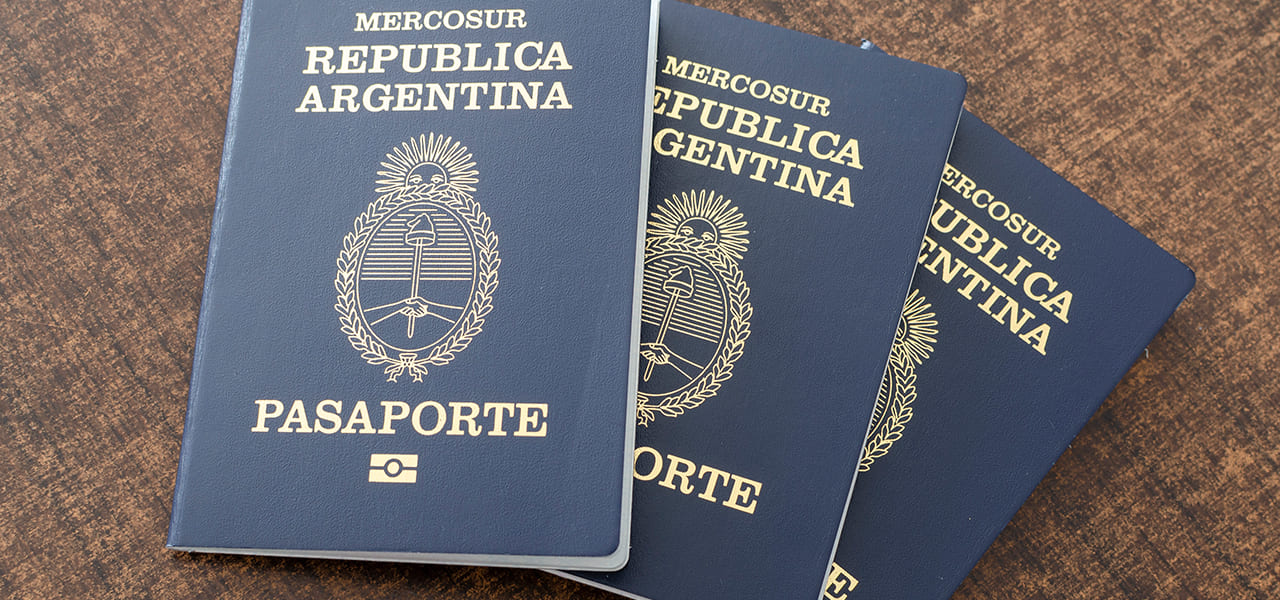
Portuguese citizenship grants full European Union rights, visa-free travel to approximately 185+ destinations, access to one of Europe’s safest and most developed countries, and the ability to live, work, study, and do business across all 27 EU member states. It can also be passed to future generations and allows dual citizenship in most cases.
A Portuguese passport offers numerous advantages, including:
There are multiple ways to acquire Portuguese citizenship, including: marriage, birth, repatriation, and naturalisation.
A spouse of a Portuguese national can apply for citizenship after three years of marriage, even without living in Portugal. For instance, a Swedish woman can marry a Portuguese man, live with him abroad for three years, and then apply for citizenship. In that case, they have to provide proof that the marriage is legitimate and show a connection to the Portuguese community — such as working for a local company, studying at a university, or owning property in Portugal.
Portugal does not grant nationality by birthright. A child born in Portugal to foreign parents does not automatically become a citizen. However, if one parent has been a legal resident for at least 5 years, the child is eligible for citizenship. Additionally, children under 18 adopted by Portuguese citizens can obtain nationality.

If at least one parent, grandparent, or great-grandparent is a Portuguese citizen, an applicant may claim nationality by providing documents verifying the relationship, such as a birth certificate translated into Portuguese.
Naturalisation remains the primary route to Portuguese citizenship for most foreign nationals.
To qualify, applicants generally need to:
Following the 2026 reform (Lei Orgânica n.º 1/2026, de 18 de maio), most applicants must now complete 10 years of legal residence before applying for citizenship.
However, Portugal introduced a shorter 7-year residence requirement for citizens of European Union (EU) member states and Community of Portuguese Language Countries (CPLP) countries.
The first step toward naturalisation is obtaining Portuguese residency. There are several pathways available, each designed for different applicant profiles — from employees and entrepreneurs to retirees, remote workers, students, and investors.
Once residency is granted, applicants can begin building their qualifying residence period toward eventual citizenship.
The most popular Portuguese residency options include:
| Residency Type | Eligible Applicants | Income & Investment |
|---|---|---|
| Work Visa (D1 & D3) | D3 is only for highly qualified professionals, while D1 applies to all contracted employees | D3 requires a job offer from a Portuguese employer with a minimum salary of €1,441 |
| Entrepreneur Visa (D2) | For those wanting to start a business or work as self-employed in Portugal | – |
| Student Visa (D4 & D5) | D4 applies to undergraduate and graduate students; D5 is for short-term academic exchanges | – |
| Family Reunification Visa (D6) | For family members of Portuguese citizens or residents | – |
| Financial Independent Visa (D7) | For financially independent individuals with stable external income | Minimum confirmed income of €920 per month from dividends, rent, pensions, etc. |
| Digital Nomad Visa | For remote professionals employed outside Portugal but living in the country | Minimum confirmed income of €3,480 per month |
| Golden Visa | For investors in Portugal’s economy. | Minimum non-refundable €250,000+ investment in culture and art Fund investment of €500,000+ |
As opposed to residency routes such as the D7 Visa, Digital Nomad Visa, work visas, or family reunification, which typically involve residing in Portugal for at least 183 days per year, the Portugal Golden Visa has minimal physical presence requirements. Investors need to spend only 14 days in Portugal every 2 years.
Portugal offers several pathways to citizenship, including:
The eligibility requirements, supporting documents, and timelines vary depending on the route.
Applicants should collect the documents relevant to their chosen pathway.
Depending on the route, this may include:
Foreign documents generally require translation and legalisation or apostille.
Before applying, applicants must ensure they satisfy the conditions applicable to their route.
For example:
Applications may generally be submitted:
The application is then registered and enters the official review process.
Portuguese authorities assess the application, verify documents, conduct background checks where applicable, and confirm compliance with nationality legislation.
Additional information or supporting documents may be requested during this stage.
Once the application is approved and nationality is registered, the applicant officially becomes a Portuguese citizen.
After citizenship is granted, the new citizen may apply for a Portuguese Citizen Card (Cartão de Cidadão), which serves as the primary identification document in Portugal and throughout the European Union.
The citizen may then apply for a Portuguese Electronic Passport (PEP), which is the official travel document for journeys outside the European Union and the Schengen Area.
Applicants should budget for several additional costs that may arise during the process:
| Expense | Typical Cost |
|---|---|
| Citizenship application fee | €250 |
| CIPLE Portuguese language exam (A2) | €85 |
| Portuguese Citizen Card (standard issuance) | from €18 |
| Portuguese Electronic Passport (PEP) | €65 |
The final cost depends on the applicant’s citizenship route, country of origin, number of documents requiring legalisation, and whether professional assistance is used during the process. In addition to the official government fees, applicants should budget for translations, apostilles, criminal record certificates, etc.

Potentially, yes — but only as part of a long-term strategy.
Following Portugal’s 2026 nationality reform, citizens of CPLP countries may generally become eligible for Portuguese citizenship after 7 years of legal residence, compared with 10 years for most other foreign nationals.
The CPLP (Community of Portuguese Language Countries) currently includes:
Among these countries, São Tomé and Príncipe is particularly noteworthy because it is currently the only CPLP member state offering a dedicated citizenship by investment program, with a minimum contribution threshold of $90,000.
Astons is among the first licensed agents of the São Tomé and Príncipe Citizenship by Investment Program, with successful cases that include both approvals and issued passports.To learn more about the scheme, investment requirements, costs, and timelines, contact our experts for a personalised consultation.
In theory, such a pathway may involve:
The Astons team sought the opinion of Portuguese legal professionals regarding a scenario in which an individual is already legally residing in Portugal and subsequently acquires citizenship of Sao Tome and Principe.
While there is currently no established administrative practice, official guidance, or court precedent on this situation, the lawyers consulted believe that such an applicant may potentially qualify for the shorter 7-year residence period applicable to CPLP nationals.
According to their interpretation:
Portuguese citizenship is not automatically granted to CPLP citizens. Obtaining a São Tomé and Príncipe passport does not provide residence rights in Portugal and does not remove the requirement to obtain and maintain a Portuguese residence permit.
It is also important to note that Portugal’s 2026 nationality reform is still relatively recent. The first real-world cases are expected to reach the citizenship application stage only in the coming years, and the practical application of the rules may evolve as authorities develop administrative practice and issue further guidance.
A Portuguese passport remains one of the most valuable citizenships in the world, providing full European Union rights, extensive visa-free travel, and the ability to live, work, study, and do business across Europe.
While Portugal’s 2026 nationality reform has changed the timelines for naturalisation, multiple routes to citizenship remain available. The most suitable pathway will depend on your personal circumstances, family connections, nationality, and long-term goals.
Understanding the available options from the outset can help you choose the most efficient route and avoid unnecessary delays on the path to Portuguese citizenship.
For many investors, the most practical route to Portuguese citizenship begins with obtaining a Portuguese Golden Visa and maintaining residence until becoming eligible for naturalisation. Astons can assist throughout the entire process, from selecting the most suitable investment option and preparing the documents to application submission.
For applicants exploring the potential advantages available to CPLP citizens under Portugal’s updated nationality rules, Astons can also assist with obtaining citizenship of São Tomé and Príncipe through its Citizenship by Investment Program. As one of the first licensed agents of the program, we have experience with both approved applications and issued passports.
Whether your goal is obtaining a Portuguese Golden Visa, evaluating a São Tomé and Príncipe citizenship strategy, or building a long-term roadmap toward Portuguese citizenship, our team can help you assess the available options and choose the solution that best fits your objectives.

 Learn more
Request a Free Consultation
Book a free consultation today and let our specialists help you choose the best country for your family
Send a RequestAmong the main ones are:

Susanna Uzakova
Senior Citizenship & Residency Advisor
Portugal does not offer direct citizenship by investment. Investors must first obtain a residence permit, most commonly through the Portuguese Golden Visa program, and then satisfy the requirements for naturalisation.
Susanna Uzakova
Senior Citizenship & Residency Advisor
Susanna Uzakova
Senior Citizenship & Residency Advisor
Yes. If your parent, grandparent, or great-grandparent was a Portuguese citizen, you can apply for a Portuguese passport. Additionally, descendants of Sephardic Jews expelled from Portugal in the 15th century can apply under the repatriation program.
Susanna Uzakova
Senior Citizenship & Residency Advisor
To apply for a Portuguese passport, the applicant must personally submit the following documents:
Susanna Uzakova
Senior Citizenship & Residency Advisor
Yes, Portugal allows people to have second citizenship, but you have to check if it’s permitted in their home country.
Susanna Uzakova
Senior Citizenship & Residency Advisor
You can travel to 185+ countries, including those in the Schengen and EU. Also it simplifies the entry into the U.S., Japan, Australia, and Canada.
Susanna Uzakova
Senior Citizenship & Residency Advisor
Author

Susanna Uzakova
Senior Citizenship & Residency Advisor
Suzanna Uzakova is an international specialist and a leading expert at the company in the field of investment immigration.
Learn more about the authorShare


Related Articles
schedule a Meeting
Let’s Discuss the Details
Our expert will create a tailored solution based on your needs within 24 hours.
Susanna Uzakova
Senior Citizenship & Residency Advisor
 Your Data is Protected
Your information is handled under strict privacy policies.