







The Trump administration this week opened applications for the Trump Gold Card. According to the U.S. President, the card provides “a direct pathway to citizenship for qualified and vetted applicants.”
Still, it is a green card — a residence permit — not a passport. Three Trump Gold Card options have been introduced:
- For individual applicants: a $1 million donation + a $15,000 fee.
- Trump Corporate Gold Card for corporate sponsors: $2 million per employee.
Additional corporate costs apply. An annual maintenance fee of 1% — $20,000 per sponsored employee — is charged. When transferring sponsorship from one employee to another, a 5% transfer fee — $100,000 — plus new due-diligence costs are applied.
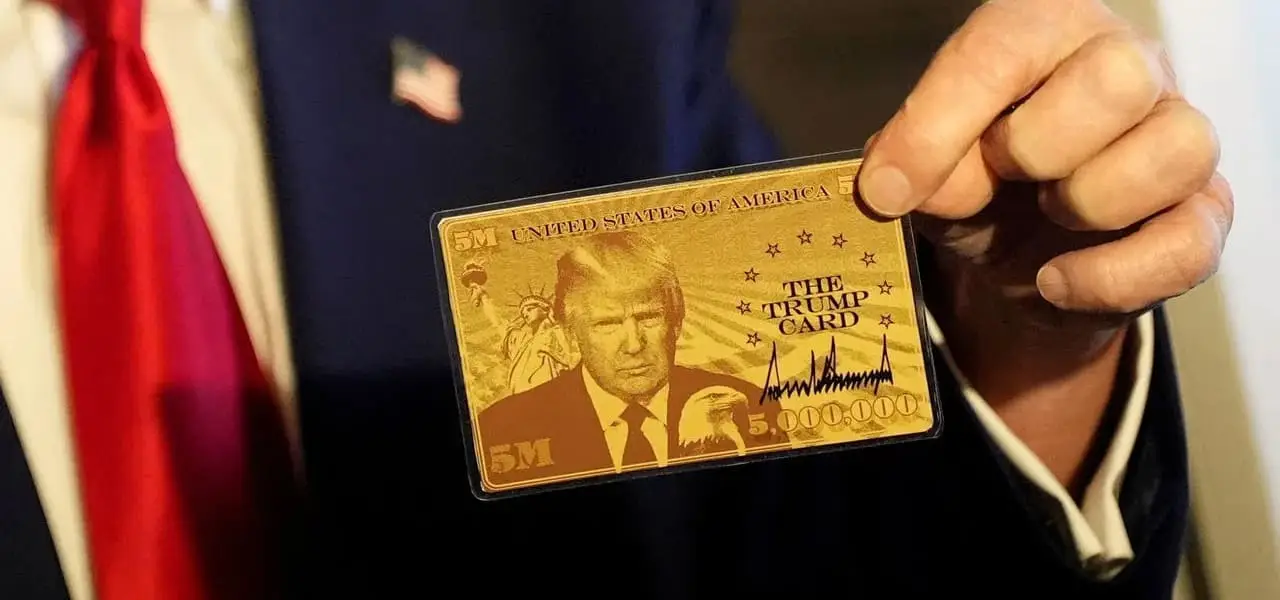
- Trump Platinum Card: $5 million. It will allow holders to spend up to 270 days per year in the United States without paying U.S. taxes on income earned outside the country. Applications for this category are not yet open.
How Does the Trump Gold Card Differ From EB-5?
The Trump Gold Card is positioned as an alternative to the EB-5 program, which has existed since 1990.
Comparison:
- EB-5: Investment from $800,000 (in practice around $1 million including fees) and the creation of at least 10 jobs. This requirement is usually straightforward because most investors do not run their own businesses — they invest through regional centers, where job creation is ensured by the project structure.
- Trump Gold Card: A donation with no investment component and no employment requirements.
Social Media Screening for Visa-Waiver Travelers
On the same day, U.S. Customs and Border Protection proposed stricter requirements for travelers from Visa Waiver Program countries — 40 states in total, including the EU, the UK, Australia, and Japan.
Under the updated ESTA application, travelers may be required to provide:
- 5-year social media history
- 10-year email history
- 5-year phone history
- Family member details
- Uploaded selfie
Purpose of the Trump Gold Card
Overall, the initiative reflects the U.S. shift toward selective entry: capital and investment are encouraged, while tourist flows undergo increasingly strict compliance checks. This policy has become especially tough after the recent attack in Washington, after which Donald Trump publicly announced his intention to restrict entry from “third-world countries.”