







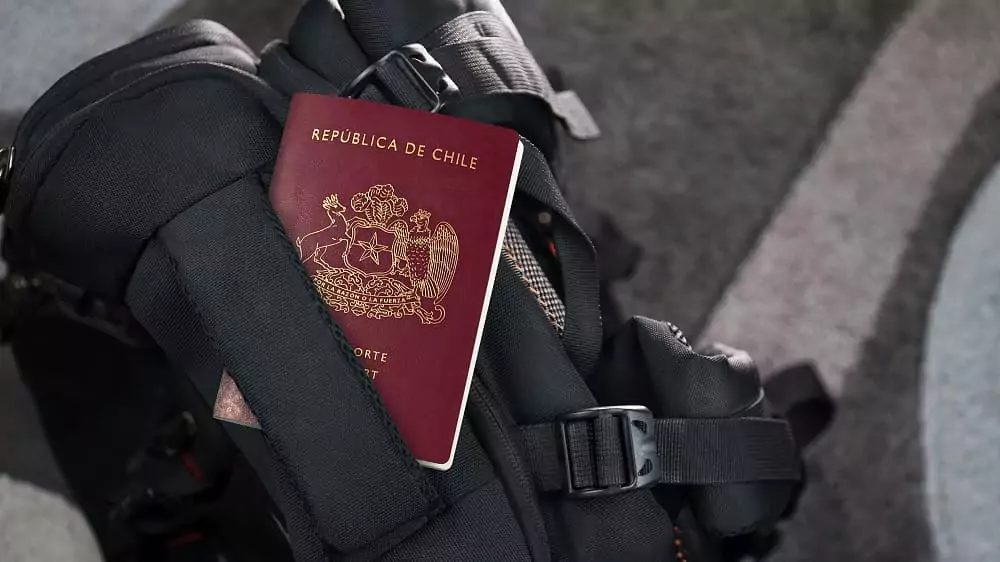
Chilean citizenship is available to foreigners who first get temporary residency, then permanent residency, and maintain legal residence in the country for several years. Depending on the immigration category, permanent residency can be obtained after 12–24 months, while citizenship is generally available after 5 years of residence or after 2 years in certain family-based cases. Chile recognises dual citizenship and offers visa-free access to more than 170 countries with a Chilean passport.
In this guide, we explain who qualifies for Chilean citizenship, which residency options are available, how the naturalisation process works, and what documents and timelines applicants should expect.

Key Takeaways
- Chilean citizenship can usually be obtained after 5 years of residence or after 2 years in certain family-based cases.
- Chile allows dual citizenship, so applicants do not need to renounce their original passport.
- Temporary residency can be obtained through employment, passive income, study, family reunification, or investment.
- Permanent residency is generally available after 24 months, with some categories qualifying after 12 months.
- Residency by investment route typically requires investments from $500,000 into the Chilean economy.
- Chilean citizens can travel visa-free to more than 170 countries, including the EU, UK, Japan, and much of Latin America.
- Chilean citizens may qualify for Spain’s accelerated citizenship route after 2 years of residence in Spain.
- Applicants for citizenship must usually pass an interview and an exam on Spanish language, culture, and civics.
- Permanent residency can be lost after more than 2 consecutive years outside Chile.
- Citizenship applications may take from 1 to 3 years to process.
Advantages of Chilean Citizenship
- Freedom of movement. A Chilean passport allows visa-free access to 174 countries, including the United States, Canada, the United Kingdom, Japan, all EU countries, and most of Latin America
- Straightforward requirements. Applicants are not required to know Spanish at the early stages, purchase expensive real estate, or pay significant government fees to obtain permanent residency and citizenship
- Access to social benefits. Foreigners who become Chilean citizens gain access to public healthcare, education, and social support programs for themselves and their families
- Favorable tax rules. Chilean tax residents are generally taxed on worldwide income, but new foreign residents benefit from a special regime under which only Chilean-source income is taxed during the first 3 years. In some cases, this period may be extended
- Relocation opportunities. Chilean citizenship can simplify relocation to Europe through Spain’s accelerated naturalization process. Chilean citizens may apply for Spanish citizenship after only 2 years of residence in Spain instead of the standard 10 years
- Dual citizenship allowed. Chile recognizes dual citizenship, meaning applicants do not need to renounce their Russian passport
Who Is Eligible for Chilean Citizenship
 Under Chilean nationality law, citizenship may be acquired either by birth or through naturalisation.
Citizenship by Birth
Children born in Chile generally receive Chilean citizenship automatically under the principle of jus soli (“right of the soil”). Exceptions apply if the child is born to foreigners who are temporarily in the country, such as tourists or transit passengers, as well as to foreign diplomats and government officials. In such cases, the child may later choose Chilean citizenship within 1 year after turning 18.
Having a Chilean child may also help parents legalize their status in the country. Parents can apply for residency through family reunification.
This category applies to close family members, including:
- Spouses or partners
- Parents
- Minor children
- Children with disabilities
- Unmarried students up to 24 years old
- Minors under legal guardianship
- Grandparents are not included in this category.
If the applicant has close family ties to a Chilean citizen or permanent resident, the period required before applying for permanent residency may be reduced to 12 months. Certain relatives may also qualify for accelerated citizenship after only 2 years of residence.
This applies to:
- Spouses of Chilean citizens who meet the requirements
- Blood relatives of Chilean citizens up to the second degree
- Individuals adopted by Chilean citizens
- Children of people who lost Chilean citizenship before their birth
Citizenship by Naturalisation
Permanent residents may apply for Chilean citizenship through naturalization. Eligible categories include employees, entrepreneurs, spouses of Chilean citizens, refugees, and several other groups.
To qualify, the applicant must:
- Hold foreign citizenship
- Be at least 18 years old
- Reside in Chile for at least 5 years
- Hold valid permanent residency status (Residencia Definitiva)
- Have no criminal record or ongoing criminal proceedings involving offenses punishable by imprisonment of 60 days or more
- Demonstrate sufficient financial means to support themselves
In special cases, applicants may apply from the age of 14 if their parents have already naturalised in Chile.
Grounds for Obtaining Chilean Residency
 To eventually qualify for citizenship, foreigners must first obtain temporary residency in Chile. Residency permits are issued by the Chilean National Migration Service (Servicio Nacional de Migraciones — SERMIG) and are usually valid for up to 2 years with the possibility of renewal.
Employment
Applicants need:
- A notarised job offer from a Chilean legal entity
- Official acceptance from the foreign applicant
- An employment contract certified by a Chilean notary
If the applicant already has a valid employment contract, residency is generally issued for 2 years and may be renewed if employment continues.
Applicants with only a job offer initially receive a 90-day work visa. After entering Chile, they have 45 days to submit the employment contract and obtain residency.
Seasonal Work
This type of residency resembles a standard work visa but allows foreigners to enter Chile either once or annually while staying in the country no more than 6 months per year.
Within 45 days after arrival, applicants must provide a notarized employment contract. The permit may be issued for up to 5 years and extended for an additional 2 years.
Pension or Passive Income
This residency category (“rentista visa”) is designed for foreigners who receive stable passive income sufficient to cover living expenses.
Eligible income sources may include:
- Rental income
- Dividends or securities income
- Pensions
There is no officially fixed minimum income threshold, but authorities generally expect approximately:
- $1,500 per month for working-age applicants
- $600 per month for retirees
Applications may be submitted online with documentary proof of income. It is also possible to apply while already in Chile under another visa category, including tourist status.
Family Reunification
Family reunification residency applies to:
- Spouses or equivalent partners of Chilean citizens
- Parents
- Minor or dependent children
- Students up to 24 years old
This permit also grants the right to work in Chile.
Study
Student residency requires:
- An invitation or acceptance letter from a recognized educational institution
- Proof of sufficient financial resources
Student residents may work up to 30 hours per week.
Other Grounds
Additional categories eligible for residency include:
- Individuals serving prison sentences or on probation in Chile
- Foreigners remaining in Chile under court order
- Humanitarian applicants such as refugees
- Religious workers
- Foreigners undergoing medical treatment
Reasons for Residency Refusal
SERMIG may reject a residency application if the applicant:
- Does not meet the requirements of the immigration category
- Is under criminal investigation for offenses recognized by Interpol or Chilean law
- Submitted false information or forged documents
- Suffers from diseases that justify entry restrictions
- Attempted illegal entry into Chile during the previous 5 years
- Is subject to an active deportation order
Residency for Investors
Foreign investors may obtain Chilean residency by investing at least $500,000 or the equivalent in another currency into the Chilean economy.
The investment must contribute to the production of goods or services in Chile.
This usually involves:
- Ownership of at least 10% of a Chilean company
- An investment project approved by Chile’s Ministry of Foreign Affairs
Applicants must provide:
- A sponsorship letter issued by INVESTCHILE
- A detailed investment plan specifying the purpose and amount of investment
- Company incorporation documents
- Proof of municipal patent payment
- Evidence that the invested funds belong to the applicant
Young entrepreneurs may also apply through the government-backed Start-Up Chile program, which supports foreign startups.
Grants depend on the chosen track:
- Build: up to 15 million Chilean pesos (approximately $16,800)
- Ignite: up to 30 million pesos (approximately $33,700)
- Growth: up to 75 million pesos (approximately $84,200)
How to Obtain Chilean Residency
 Residencia Temporal is a long-term residence permit issued by SERMIG. Most permits are valid for up to 2 years.
Applications are generally submitted online, except in cases involving:
- Family reunification
- Humanitarian grounds
- Changes of immigration category
- Dependents changing status
Main Steps for Obtaining Residency Online
- Create a ClaveÚnica account
This national login system is used for government services in Chile. - Submit the application through the SERMIG portal
Applicants complete the form through the Portal de Trámites Digitales and pay the government fee through the Treasury portal (TGR). The fee is approximately $100. Applicants under 18 are exempt. - Receive approval
Notifications are sent by email and through the applicant’s online account. If additional documents are required, applicants usually have 10 days to provide them. - Print the electronic residency permit
The Estampado Electrónico confirms resident status and includes immigration category details and validity dates. After issuance, the applicant has 90 days to enter Chile. - Obtain the foreigner identity card
Within 30 days after residency becomes active, foreigners must obtain a Chilean ID card for foreigners (Cédula de Identidad). The 2026 government fee is approximately 4,270 pesos (around $5).
If residency is denied, the migration service must explain the reason and specify the deadline for leaving the country.
How to Obtain Permanent Residency in Chile
To obtain permanent residency (Residencia Definitiva), foreigners generally need to live in Chile for at least 24 months under valid temporary residency.
The period may be reduced to 12 months if the applicant:
- Has close relatives who are Chilean citizens or permanent residents
- Holds a pension/passive income visa
- Obtained investor residency and the investment proved effective
- Made a significant contribution to Chilean society, science, culture, or sports
Applicants must:
- Have no criminal record
- Pay taxes on time
- Provide proof of address, such as a lease agreement or property ownership
Applications are submitted online through ClaveÚnica and SERMIG. They must be filed no later than 90 days before the expiration of the current residency permit.
Permanent residency costs approximately 138,974 Chilean pesos (around $156). Processing usually takes between 7 and 90 days.
Permanent residency remains valid indefinitely but may be lost if the holder stays outside Chile for more than 2 consecutive years.
How to Get Chilean Citizenship
Under Chilean law, the following categories may apply for citizenship:
- Adults over 18 who hold permanent residency and have lived in Chile for at least 5 years
- Applicants aged 14–18 with permanent residency and notarised parental consent
- Minors whose parent is a recognized refugee or Chilean citizen
- Applicants who have lived in Chile for 2 years as:
- spouses of Chilean citizens
- close relatives of Chilean citizens
- adopted persons
- children of former Chilean citizens
Chile also provides an accelerated route for descendants of Chilean citizens born abroad. This process generally takes around 3 years.
Citizenship is not granted to foreigners convicted within:
- The last 10 years for serious crimes
- The last 5 years for minor crimes
Documents Required for Citizenship

The standard application package includes:
- Completed application form
- Notarised copy of the national ID
- Police clearance certificate from the country of origin with apostille and Spanish translation
- Chilean criminal record certificate
- Permanent residency documents
- Proof of income and tax payments
- Copy of the RUN identification number
- PDI certificate for minors
All foreign documents must be translated and apostilled.
Interview and Examination
Applicants must:
- Attend an interview with the Chilean investigative police (PDI)
- Pass an exam on Spanish language, Chilean culture, and civic knowledge
The exam is free of charge and registration is completed online.
Afterward, the citizenship application is submitted through the SERMIG portal together with the government fee. Processing may take from 1 to 3 years.
Getting a Chilean Passport
After citizenship approval, applicants apply for a passport through the civil registry office.
Key details:
- Processing time: approximately 1 month
- Government fee: around 69,660 pesos (approximately $78)
- Validity period: 10 years
Applicants also participate in a formal ceremony during which they take an oath of allegiance to Chile and its constitution.
Conclusion
Chile remains one of the more flexible immigration destinations in Latin America for foreigners seeking long-term residency and eventual citizenship. The country combines relatively accessible residency routes, recognition of dual citizenship, favorable mobility, and a comparatively straightforward naturalization process. While obtaining citizenship still requires several years of legal residence, stable income, and integration into the country, Chile offers a realistic pathway for those planning long-term relocation or international diversification.