In 2026, high-net-worth investors can secure residency in multiple countries through financial contributions, combining lifestyle flexibility, business opportunities, and long-term strategic benefits. Residency by investment programs allow applicants to obtain a residence permit (temporary or permanent) by investing in real estate, businesses, funds, or government approved programs. Some countries offer pathways to citizenship, while others provide immediate tax advantages or simplified global mobility.
This guide examines the top ten programs worldwide, comparing minimum investments, processing times, family coverage, residency requirements, tax implications, and potential routes to citizenship, enabling informed decisions for individuals and families seeking both security and opportunity abroad.
Key Takeaways
- Program choice depends on personal goals: Mobility, taxes, family inclusion, and citizenship timelines vary.
- EU access & Schengen travel: Greece, Portugal, Italy, Hungary provide visa-free Schengen movement.
- Fastest routes: UAE (from 2 weeks), Greece (from 4 months) — minimal bureaucracy, quick processing.
- Lowest entry thresholds: Greece offers €250,000 for certain real estate; total costs and obligations must be considered.
- Tax optimization: UAE (0% personal income tax); Greece and Cyprus Non-Dom regimes offer planning advantages.
- Citizenship timeline: Greece 7 years, Portugal 7–10 years, Cyprus 8 years, Hungary 8 years, USA 5 years (EB‑5); UAE has no direct path.
- Family inclusion: Portugal, Malta, Greece, Cyprus allow spouses, dependent children, and sometimes parents without extra investment.
- Global mobility without relocation: Portugal, Greece, Italy, Hungary, UAE, Cyprus require minimal physical presence; USA requires actual residence.

What Is Residency by Investment?
Residency by investment (RBI) grants foreign nationals legal residency in exchange for targeted financial contributions. Programs are structured to attract capital while offering investors and their families stable residency rights. Typical investments include real estate acquisitions, fund subscriptions, corporate investments, or direct contributions to government or strategic initiatives. Many programs extend eligibility to spouses, minor and adult children, and sometimes dependent parents, offering a comprehensive family solution.
Golden Visa vs. Residency by Investment: What’s the Difference?
While often used interchangeably, the terms “golden visa” and “residency by investment” have subtle distinctions:
- A “golden visa” generally refers to an RBI program with pre-defined investment options. The state offers standard investment options: usually real estate purchases, investments in funds or financial instruments, or sometimes a non-refundable contribution. Requirements and amounts are fixed, and the program is mainly designed for passive investors.
- Residency by investment is a broader concept. It includes different ways of obtaining residency, including starting or developing a business. These programs usually involve active investor participation: preparing a business plan, creating jobs, and demonstrating economic benefits. Conditions can be more flexible and considered individually.
Essentially, golden visas form a subset of the broader residency-by-investment landscape, focusing on structured, low-management pathways.
Types of Investments Eligible for Residency
Investment options generally fall into 4 categories, each with unique benefits and obligations:
Real Estate
The investor buys property above a set minimum amount and holds it for a specified period.
Common conditions include:
- Minimum investment threshold
- Permitted property types (residential/commercial)
- Mandatory holding period
- Proof of source of funds
Recently, many countries have introduced geographical restrictions and higher thresholds in high-demand regions. For example, in Greece, the minimum threshold is €800,000 in Athens, Thessaloniki, and popular islands, and €400,000 in other regions. There is also an option to buy property converted from commercial to residential at €250,000, regardless of location.
Government Bonds and Investment Funds
Financial instruments are used as an alternative to real estate, especially for investors who do not want to manage assets.
Common options include:
- Purchasing government bonds
- Investing in licensed investment or venture funds
Advantages: low operational risk and simple administration. Disadvantages: usually lower returns and strict holding periods.
Business Investments and Job Creation
This format is mostly used in investor residency programs for entrepreneurs.
Typical requirements:
- Investing capital in an existing or new business
- Registering a company in the host country
- Creating a certain number of jobs for local citizens
- Demonstrating the economic viability of the project
These programs are more complex administratively but provide greater flexibility and, in some countries, can accelerate the path to permanent residency or citizenship.
Capital Transfer Programs
Capital transfer programs involve placing a significant sum of money into the country’s financial system without tying it to a specific asset.
Common examples:
- Deposits in a national bank
- Non-refundable contributions to government funds
- Investments in infrastructure or strategic projects
This option is mostly used by high-net-worth individuals prioritizing speed, predictability, and minimal management involvement.
Top Residency-by-Investment Programs in 2026
Greece “Golden Visa”
Investment Requirements
The most popular option for participating in Greece’s residence by investment program remains real estate investment:
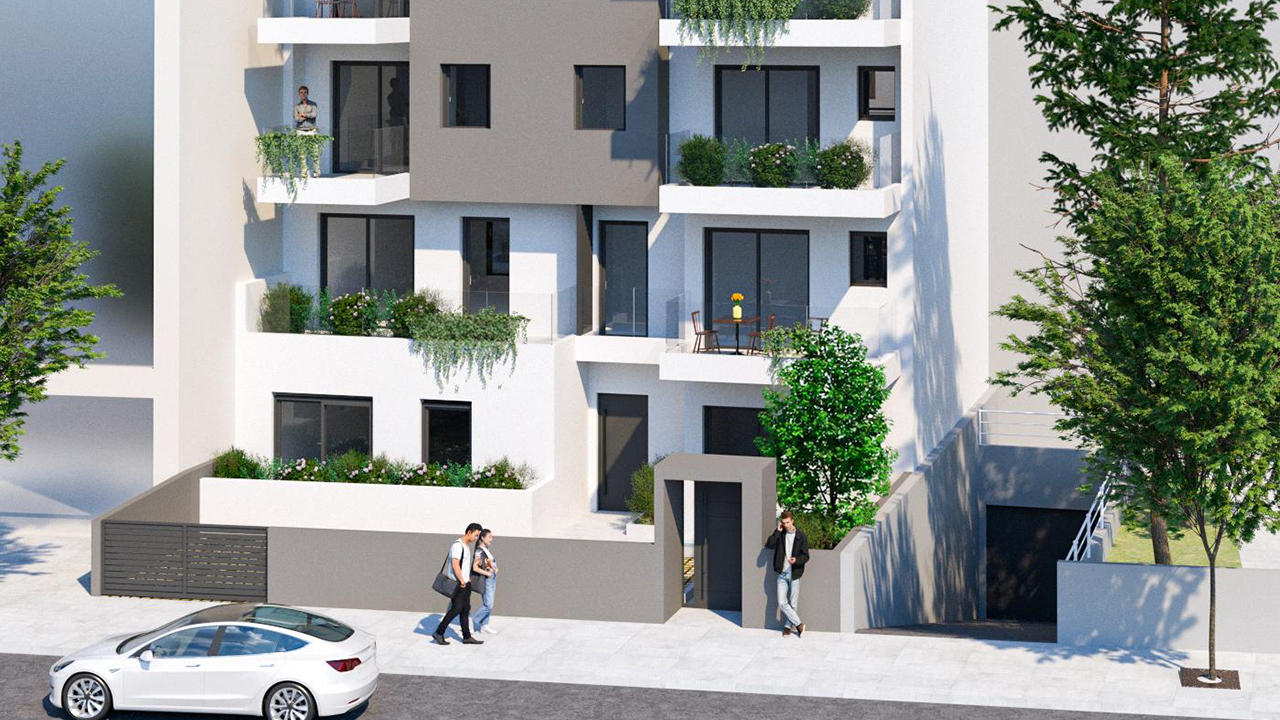
- €250,000: Properties converted from commercial to residential use, or cultural heritage properties requiring mandatory restoration. The property can be located anywhere in Greece, regardless of current higher thresholds.
In practice, most such projects are concentrated in Athens and the Attica region, allowing investors to buy property in a high-demand or premium location at the minimum investment threshold.
- €400,000: Purchase of a single property of at least 120 m² in most regions of the country.
- €800,000: Property in Athens, Thessaloniki, and islands with a population over 3,100.
The Greek residency by investment program also allows several other forms of investment besides real estate:
- Long-term rental of tourist property for at least 10 years.
- Bank deposit from €500,000.
- Investment of €500,000 in Greek companies or private investment funds.
- Purchase of Greek government bonds from €500,000.
- Investment of €350,000 in mutual funds investing exclusively in Greek assets.
Program Advantages
- Renewable 5-year residence permit, with unlimited renewals if investments are maintained.
- No permanent residence requirement in Greece to maintain the status.
- Visa-free travel in the Schengen zone: Up to 90 days within each 180-day period.
- Right to earn rental income from property acquired under the program.
- Access to Greece’s healthcare and education system as an EU resident.
- Favorable Non-Dom tax regime: €100,000 fixed tax on global income if program conditions are met.
Processing and Renewal Times
- Processing time starts from 4 months, making it one of the fastest programs in the EU.
- Residence cards are issued for 5 years and can be renewed indefinitely while investments are maintained.
- Eligibility for permanent residence arises after 5 years, and for citizenship, after 7 years of actual residence with language and integration requirements fulfilled.
Family Inclusion
All family members receive residence permits on the same terms as the main applicant; no additional investments are required. Eligible family members include:
- Spouse
- Children up to 21 years old
- Parents of the investor and spouse
Changes and Current Restrictions
- Since 2024, program conditions have become stricter: minimum investment amounts increased in popular and tourist regions, and rules now require the purchase of a single property of a specified size.
- The €250,000 threshold remains for projects converting commercial properties into residential or for cultural heritage properties, allowing investors to enter the program with a lower budget despite stricter central-location rules.
Portugal Golden Visa
Investment Requirements
- Minimum investment of €500,000 in regulated investment or venture capital funds registered in Portugal.
- At least 60% of fund capital must be directed to Portuguese companies.
- Minimum holding period for the investment: 6 years to maintain residence.
- Alternative options: non-refundable contributions of €250,000 to cultural or scientific projects; business investments creating jobs in Portugal.
Program Advantages
- Visa-free access to 29 Schengen countries.
- Right to live, study, and run a business in an EU country.
- Access to the European banking system and financial instruments.
- Opportunity for education in the EU.
- Pathway to Portuguese citizenship in 7–10 years of residency.
- No requirement for permanent residence in the country.
Processing and Renewal Times
- Application processing takes approximately 18 months, including document submission and biometrics.
- First residence card is issued for 2 years with the possibility of extension.
- Total time to citizenship reaches 7–10 years, assuming minimal presence requirements and maintained investments.
Family Inclusion
Portugal’s Golden visa is among the most family-friendly residency programs in the EU. Family members can be included:
- Spouse
- Children up to 18 years old
- Financially dependent children up to 26 years old (if in education)
- Dependent parents of the main applicant
No additional investment is required for family members.
Changes and Current Restrictions
- Since October 2023, purchase of residential property and bank deposits are no longer eligible for obtaining Portuguese residence by investment. These changes aim to reduce housing market pressure and redirect investments to other economic sectors.
- The program continues to operate: investments in funds must be held for at least 6 years, and stay requirements remain minimal — 7 days in the first year and 14 days in each subsequent two-year period.
Cyprus Permanent Residency by Investment
Investment Requirements
- The main option for obtaining Cyprus residency through investment is real estate: purchase of new residential property from a developer for €300,000 or more. The property can be held in the investor’s name or in a company where the applicant and spouse are the only shareholders. Multiple properties can be purchased, and rental is allowed.
- Alternative investments:
- Purchase of one or two commercial properties (offices, shops, hotels) with market value from €300,000.
- Investment of €300,000 or more in a Cypriot company (creating a new business or increasing capital of an existing one) with real activity and at least 5 employees.
- Investment of €300,000 or more in Cypriot private investment funds (AIF, AIFLNP, RAIF).
- Financial requirements: proof of stable foreign income — at least €50,000/year for the main applicant, +€15,000 for spouse, +€10,000 per minor child.
- Employment under investor residency is prohibited, but business ownership and income generation are allowed.
Program Advantages
- Investor receives permanent residency immediately, no renewals required.
- No minimum stay requirement; visiting Cyprus once every 2 years is sufficient to maintain status.
- Access to EU infrastructure, including European banking and account opening.
- Tax benefits: potential reduction in taxation on passive income and foreign assets.
Processing and Renewal Times
- Processing usually takes around 8 months.
- Residency is permanent, no renewal required, but applicant and family members must complete biometrics: after approval, visit Cyprus within one year to submit biometric data and receive documents.
- Citizenship is possible after 8 years of residence, meeting naturalization conditions, including physical presence requirements.
Family Inclusion
- Spouse
- Children up to 25 years old, if financially dependent
No additional investments are required for family members, but total required verified income increases. All included family members must visit Cyprus at least once every 2 years to maintain status.
Changes and Current Restrictions (2025–2026)
Cyprus residency does not grant Schengen visa-free travel, though Cyprus is negotiating entry into Schengen in late 2026.
UAE Golden Visa
Investment Requirements
- 2-year investor visa: investment from $204,000 in residential or commercial property in Dubai (joint ownership with spouse allowed).
- 10-year Golden Visa: investment from $545,000 in property anywhere in the 7 Emirates.
- Property must be in a freehold zone; for new buildings, a certificate of completion is required. Selling the property leads to loss of residency.
- Residency is renewed unlimited times while investments are maintained.
Program Advantages
- Right to live, work, study, and run a business in the UAE.
- Access to the banking system and financial infrastructure.
- 0% personal income tax.
- No permanent residence requirements to maintain status.
- High real estate yields (around 7% in Dubai).
- Cryptocurrency transactions may be allowed in some cases, complying with AML/KYC rules.
Processing and Renewal Times
- Processing from 2 weeks, usually requires one visit for medical check and biometrics; after that, the applicant receives Emirates ID and residency.
- Visa issued for 2 or 10 years, depending on investment threshold, with unlimited renewals while maintaining investment.
Family Inclusion
- Up to 18 years (2-year visa)
- Unmarried sons up to 25 years (10-year visa)
- Unmarried daughters of any age (10-year visa)
- Financially dependent children with disabilities of any age
- Parents (financial dependency proof required for 2-year visa)
- Domestic worker sponsorship available only for 10-year visa holders
Changes and Current Restrictions
- UAE citizenship is not a standard continuation of residency and is available only in exceptional cases. The program should be viewed as a tool for long-term residency and tax optimization, not as a direct path to a passport.
Malta Permanent Residency by Investment
Investment Requirements
- The Malta program uses a combined investment scheme: government contribution, donation, and real estate investment.Two options:
- Long-term rental for 5 years (from €169,000)
- Property purchase (from €474,000)
- Investor must prove assets ≥ €500,000.
Program Advantages
- Permanent EU residency without stay requirements.
- Right to live, work, study, and run a business in Malta.
- Visa-free travel in 29 Schengen countries.
- Favorable tax regime: if not residing in Malta, only Maltese-sourced income is taxed.
Processing and Renewal Times
- Processing ~6 months on average.
- Status is permanent, but a residence card must be technically renewed every 5 years.
Family Inclusion
- Spouse
- Children up to 18 years automatically
- Children over 18 if financially dependent and unmarried
- Parents, grandparents can be included if financially dependent
Changes and Current Restrictions
- EU requirements tightened source-of-funds verification and financial stability checks.
Italy Residency by Investment
Investment Requirements
Italy offers residency through investments in:
- From €500,000 — Italian company shares.
- From €250,000 — innovative startups (reduced threshold).
- €1,000,000 — non-refundable donation to projects of public interest (culture, education, science).
- From €2,000,000 — Italian government bonds.
- Investments must be made within 3 months of entry on a type D visa.
- Residency is maintained as long as the investment is retained.
Program Advantages
- EU resident status with the right to live, work, study, and run a business in Italy.
- Access to Italian and European banking systems.
- No minimum stay requirements.
- Free travel across the Schengen zone for business or personal purposes.
- Potential path to EU citizenship if conditions are met.
Processing and Renewal
- Application processing from 3 months after submission of full documents.
- Initial residency is granted for 2 years and can be renewed if investments are maintained.
Family Inclusion
- Spouse
- Children under 18
- Parents over 65 (of applicant or spouse)
Changes and Current Restrictions
- Property purchase alone does not qualify for investment residency.
- Citizenship is possible after 10 years of residence under general naturalisation rules.
Hungary Golden Visa
Investment Requirements
Hungary offers residency through:
- From €250,000 — purchase of real estate fund units approved by the Hungarian financial regulator, held for 5 years, with a stated capital return at the end.
- From €1,000,000 — non-refundable donation to an accredited educational or scientific institution.
- Investments are made via bank transfer, and key procedures usually require personal presence in Hungary.
- After receiving the investor entry visa, investments must be completed in the required timeframe, and residency is maintained by keeping the investment.
Program Advantages
- Right to live, work, and study in Hungary (EU member state).
- Access to Hungarian and EU banking systems.
- No minimum stay requirement.
- Free travel across the Schengen zone under general rules.
- Competitive tax environment: corporate tax 9%, personal income tax 15%.
Processing and Renewal
- Processing time from 4 months.
- Residency is granted for 10 years, renewable if investments are maintained and formal requirements are met.
- After 8 years, the investor may apply for Hungarian citizenship under general naturalisation rules.
Family Inclusion
- Up to 18 — automatically included
- Over 18 — must be financially dependent and unmarried
U.S. Green Card (EB‑5 Visa)
Main Requirements
- Regional Center investment: from $800,000 — passive investment in a USCIS‑approved project in a Targeted Employment Area (TEA). The investor does not manage the business; the regional center ensures creation of at least 10 jobs. Investments held for ~5 years with potential capital return. Most popular, least operationally complex.
- Direct investment: from $1,050,000 — investment in own or existing business, active management required, minimum 10 full-time jobs for U.S. citizens or permanent residents. Greater flexibility but higher operational risk.
- Both EB-5 visa investment options lead to U.S. permanent residency (green card) without language, education, or work experience requirements; citizenship is possible after 5 years of residence.
Program Advantages
- Green card for an investor and their family, right to live, work, study anywhere in the U.S.
- No employer, profession, or business restrictions.
- Path to U.S. citizenship after 5 years.
- Convenient passive investment option.
Processing Times
- Conditional green card usually 12–18 months; permanent green card ~2–2.5 years.
- Passive investments are held ~5 years; capital return depends on project structure.
Family Inclusion
- Spouse
- Children under 21, unmarried
- The family receives conditional and permanent green cards simultaneously with the main applicant. No additional investment required.
Restrictions and Notes
- In 2026, the U.S. suspended issuing immigrant visas for citizens of 75 countries, affecting all categories, including EB‑5. Applications and interviews continue formally, but new visas are not issued until further notice. Existing green cards and non-immigrant visas are unaffected.
How to Choose the Right Investment Residency Program
Choosing an investment residency program depends not on the “highest-ranked country,” but on your personal goals. The same program may be ideal for mobility but inconvenient for taxes or family inclusion.
For EU Access and Schengen Rights
If your priority is freedom of movement in Europe and EU resident status, programs in Schengen countries are optimal. “Golden visas” from Portugal, Greece, Italy, and Hungary provide EU residency with:
- Visa-free travel across the Schengen zone
- A potential pathway to permanent residency and citizenship if conditions are met
Fastest and Simplest Option
If speed and minimal bureaucracy are key, programs with short processing times and formalized requirements are best. These include:
- UAE residency (from 2 weeks)
- Greece residency (from 4 months)
Lowest Investment Thresholds
If the main factor is not the nominal minimum but total cost including fees and obligations, Greece is attractive:
- From €250,000 for certain real estate formats
It’s important to consider not only the investment but also associated costs, holding periods, and liquidity.
For Tax Optimisation
Programs that offer favorable tax treatment are often chosen for financial and business planning:
- UAE (0% personal income tax)
- Greece and Cyprus under Non-Dom regimes
For Citizenship
Focus not on the residency program itself, but on naturalization requirements. More predictable paths include:
- Greece — 7 years
- Portugal — 7–10 years
- Cyprus — 8 years
- Hungary — 8 years
- USA — 5 years with EB‑5 green card
In the UAE, residency does not provide a direct path to citizenship.
For Family Relocation
Not all programs are equally “family-friendly.” The widest inclusion for spouses, adult children, and parents is offered by Portugal, Malta, Greece, and Cyprus. In such programs, no additional investment is usually required for family members, although income requirements may increase.
For Global Mobility
If relocation is not planned, the critical factor is the absence of strict residency requirements. Programs that allow minimal or no physical presence are suitable, such as Portugal (minimal days), Greece, Italy, Hungary, UAE, and Cyprus. In contrast, the USA requires actual residence to maintain status and qualify for citizenship.
| Country | Investment Options | Minimum Investment | Processing Time | Residency Duration | Renewal Option | Citizenship | Family Inclusion | Physical Presence Requirement |
|---|
| Portugal | - Funds/venture funds;
- alternatively cultural/scientific donations
- business creating jobs
| €500,000 (funds) / €250,000 (donations) | from 18 months | 2 years | Yes | 7–10 years | - Spouse,
- children
- <18, dependent children
- <26, dependent parents
| Minimum: 7 days in 1st year, 14 days in each subsequent 2-year period |
| Greece | - Real estate (threshold varies by region/format);
- 10-year rental, deposits,
- companies/funds, government bonds
| €250,000 / €400,000 / €800,000 (real estate) | from 4 months | 5 years | Yes | 7 years | - Spouse,
- children
- <21, parents
| Permanent residence not required |
| Malta | Combination: government contribution + donation + rental/purchase of property | €169,000 (rental) / €474,000 (purchase) | from 6 months | Permanent (unlimited) | Every 5 years | 5 years | - Spouse,
- children (incl. dependents
- >18),
- parents, grandparents
| Residence not required |
| UAE | Real estate: 2- or 10-year investor visa | $204,000 (2-year, Dubai) / $545,000 (10-year) | from 2 weeks | 2 or 10 years | Yes, if investment maintained | In exceptional cases | - Spouse,
- children (age varies by visa),
- parents;
- for 10-year visa — domestic workers
| Residence not required; usually one visit for medical/biometrics |
| Italy | - Company shares;
- startups;
- donation;
- government bonds
| €250,000 (startup) / €500,000 (shares) | from 3 months | 2 years | Yes, if investment maintained | 10 years | - Spouse,
- children
- <18, parents 65+
| Permanent residence not required |
| Cyprus | Investment from €300k:- real estate, commercial property,
- company stake
- (≥5 employees), funds
| €300 000 | from 8 months | Permanent (unlimited) | No renewal required | 8 years (naturalisation, with residency requirements) | - Spouse,
- children
- <25 (dependents)
| Visit at least once every 2 years |
| Hungary | - Real estate fund units;
- alternatively donation
| €250,000 (funds) / €1,000,000 (donation) | from 4 months | 10 years | Once more for 10 years | 8 years | - Spouse,
- children <18; >18 if dependent
| Permanent residence not required |
| USA | Passive or direct investment | $800,000 (Regional Center TEA) / $1,050,000 (direct) | from 12 months | Permanent (green card) | Yes, after conditions lifted | 5 years | - Spouse,
- children <21 (unmarried)
| Actual residence required; long absences may risk status |
Learn more
Request a Free Consultation
Book a free consultation today and let our specialists help you choose the best country for your family
Send a Request 































 +44 207 043 6026
  +357 252 30233
  +971 454 01311
  +902 129 008 710
  +302 112 340 656
  +1 (888) 2033901


 18-minute read
 1,976 views
 Share
Share











 Learn more



 Your Data is Protected