





































 +44 207 043 6026
  +357 252 30233
  +971 454 01311
  +902 129 008 710
  +302 112 340 656
  +1 (888) 2033901


The Best Healthcare Systems in the World
-
 13-минут на чтение
 -
4,328 views
-
Share
 13-минут на чтение
 4,328 views
 Share
Share
Alexander Kosovskiy
Senior Citizenship & Residency Advisor
- Last edited: June 1, 2026
According to the CEOWORLD Health Care Index 2025, the countries with the best healthcare systems in the world are Taiwan, South Korea, Australia, Canada, Sweden, Ireland, the Netherlands, Germany, Norway, and Israel. These countries combine broad access to medical services, high-quality treatment, strong healthcare infrastructure, and effective protection against excessive medical expenses.
However, healthcare quality is not determined by medical technology alone. For people considering relocation, equally important factors include waiting times, insurance coverage, access to specialists, prescription drug costs, and the overall patient experience. In this article, we examine the top 10 countries with the best healthcare n the world, how they operate in practice, and what patients can realistically expect when living in each country.
The article is provided for general informational purposes only. Astons does not provide medical tourism services. However, our experts specialise in global residency and citizenship by investment programs and can help you explore international relocation opportunities. To learn more and receive personalised guidance, book a free consultation with an Astons specialist.

In Israel, patients do not choose between public and private clinics in the traditional sense. Instead, they join one of four health funds: Clalit, Maccabi, Meuhedet, or Leumit. These non-profit healthcare organisations provide mandatory health insurance to citizens and permanent residents. Each fund must offer a standard package of services known as the health basket (sal briut), which includes doctor visits, diagnostics, laboratory tests, hospitalization, maternity care, mental health services, certain medications, medical equipment, and rehabilitation services.
For patients, this creates a clear pathway: most healthcare is provided through their health fund and its network of clinics, physicians, laboratories, and contracted hospitals. The basic system covers the entire population, and 73% of residents are satisfied with access to quality healthcare, above the OECD average of 64%.
However, the basic package is often not enough for faster or more convenient access to services. As a result, supplementary insurance is common. According to the OECD, more than 80% of the population has private health insurance. It is used for obtaining second medical opinions, broader doctor choice, additional procedures, medications not included in the health basket, and faster access to certain treatments.
The main limitation of the system is waiting times for some specialists and procedures. For planned care, patients typically go through their health fund and choose providers within its network. In emergencies, ambulance services can be reached through Magen David Adom by dialing 101.
Best Hospitals in Israel according to World’s Best Hospitals 2025:

For legal residents of Norway, healthcare coverage applies automatically, and the central figure in the system is the fastlege, or family doctor. Patients consult their fastlege for most health concerns, including common illnesses, chronic conditions, prescriptions, diagnostic referrals, and specialist referrals.
If the issue is urgent but not life-threatening, patients should contact the legevakt, Norway’s out-of-hours medical service, available in every municipality through the national number 116 117. In life-threatening situations, emergency services can be reached at 113.
The system is highly digitalized. Through the Helsenorge portal, patients can access information about their doctor, book appointments, renew prescriptions, and use online consultations where available. This creates a streamlined patient experience centered around a single physician and digital platform.
Healthcare in Norway is heavily subsidized but not always entirely free. Patients pay small co-payments known as egenandeler. To protect against excessive healthcare costs, a cap applies. Once a patient has paid NOK 3,278 (approximately €302) in approved co-payments, they receive a frikort (exemption card), eliminating further co-payments for covered healthcare services until the end of the year.
Norway’s strengths include strong primary care, accessible healthcare services, a well-developed emergency system, and high public trust. According to the OECD, the entire population is covered by essential healthcare services, and the country has higher-than-average physician and nurse availability.
Best Hospitals in Norway according to World’s Best Hospitals 2025:
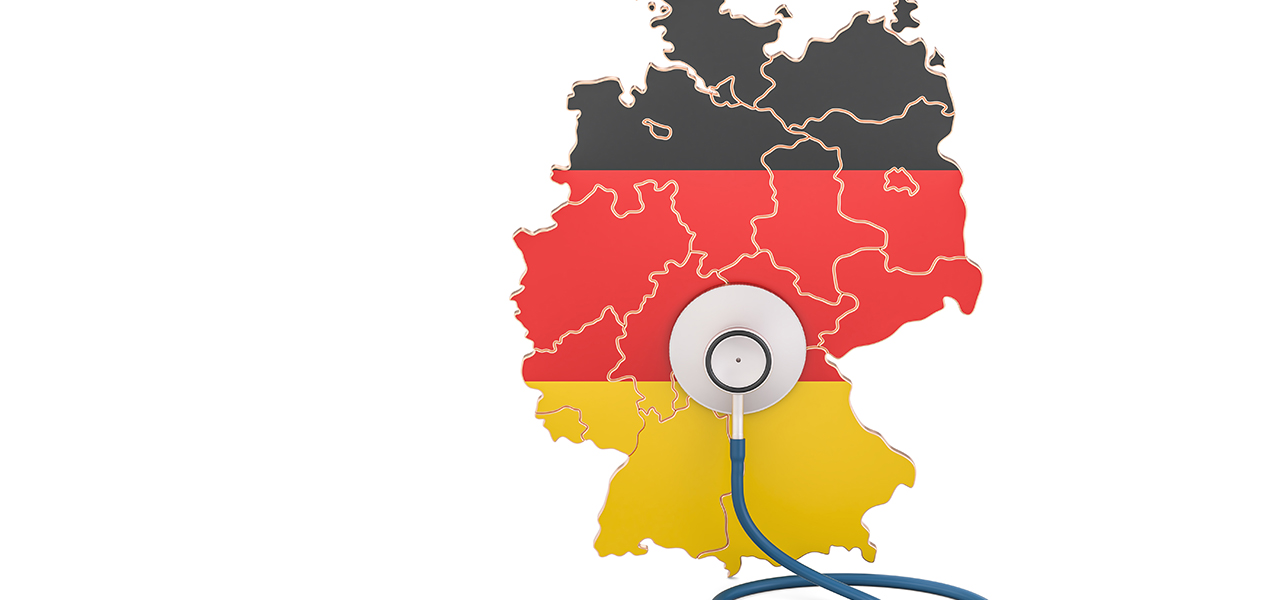
Everyone living in Germany must have either statutory health insurance (GKV) or private health insurance (PKV). Nearly 90% of the population relies on GKV, providing access to doctors, hospitals, medications, diagnostics, rehabilitation, preventive care, maternity services, and more.
For most health issues, patients begin with a Hausarzt (general practitioner or family doctor). The Hausarzt treats common conditions, issues prescriptions, and refers patients to specialists when necessary. While many specialists can be visited directly, referrals are still required for certain fields such as radiology.
Outside regular office hours, patients can call 116117 for non-life-threatening medical assistance. In emergencies involving severe illness or injury, they should dial 112.
Germany’s key strength lies in its hospital infrastructure and diagnostic capacity. According to the OECD, Germany has 7.7 hospital beds per 1,000 people compared to the OECD average of 4.2. The country also has 74 CT, MRI, and PET scanners per million inhabitants versus the OECD average of 51.
Healthcare under GKV generally does not involve major out-of-pocket expenses, although co-payments apply. Adults typically pay 10% of the cost of prescription medications, with a minimum of €5 and a maximum of €10 per package. Hospital stays require a co-payment of €10 per day for up to 28 days per year.
Best Hospitals in Germany according to World’s Best Hospitals 2025:

Healthcare in the Netherlands is considered one of the most organized systems in Europe. Everyone who lives or works in the country is required to obtain basic health insurance, while the government determines which services must be included in the mandatory package. This package covers, among other things, general practitioner care, hospital treatment, mental healthcare, and certain prescription medications.
For patients, the main entry point into the healthcare system is the huisarts (general practitioner). The huisarts coordinates care, treats most common illnesses, issues prescriptions, and refers patients to specialists or hospitals when necessary. Visits to a huisarts are covered by basic insurance and do not count toward the annual deductible known as the eigen risico.
In 2026, the eigen risico is €385. Patients are responsible for the first €385 of certain healthcare expenses, including specialist consultations, hospital treatment, prescription medications, and emergency care. However, some services are exempt from the deductible, including general practitioner visits, maternity care, district nursing, and certain treatments for chronic conditions.
When a regular huisarts is unavailable, patients can contact a huisartsenpost, an out-of-hours general practitioner service for urgent but non-life-threatening situations. In genuine emergencies, patients should contact emergency services or visit an emergency department. Such treatment may be subject to the deductible.
The practical advantage of the Dutch healthcare model is its clear patient pathway, strong primary care system, mandatory insurance coverage, and protection against major healthcare expenses. Its main weakness is limited hospital capacity. According to the OECD, the Netherlands has 2.3 hospital beds per 1,000 people compared to the OECD average of 4.2, which can result in waiting times for certain planned consultations and procedures.
Best Hospitals in the Netherlands according to World’s Best Hospitals 2025:

Ireland’s healthcare system combines public and private healthcare services. Public healthcare is administered by the Health Service Executive (HSE), while access to free or subsidized care depends on a patient’s status and eligibility for specific healthcare cards.
A Medical Card covers visits to a GP (general practitioner), prescription medications, certain dental services, and hospital treatment. A GP Visit Card allows patients to visit their family doctor free of charge, but medications and most other services remain payable separately.
Through a GP, patients receive primary care, prescriptions, ongoing medical supervision, and referrals to specialists or hospitals. Children under the age of eight benefit from a dedicated Under 8s GP Visit Card, which covers family doctor visits, scheduled health checks at ages two and five, urgent out-of-hours GP care, and asthma management.
Since 2023, patients no longer pay inpatient charges in public hospitals. However, visits to an emergency department without a GP referral generally cost €100. This fee is waived for patients with referrals, Medical Cards, and in certain other circumstances.
Prescription costs are managed through the Drugs Payment Scheme. Patients and families without a Medical Card can limit their monthly spending on approved prescription medicines and medical products to €80.
Best Hospitals in Ireland according to World’s Best Hospitals 2025:

For most patients, healthcare in Sweden begins at a vårdcentral, a local primary healthcare center. These facilities employ general practitioners, nurses, and other healthcare professionals. Patients visit them for common illnesses, chronic conditions, minor infections, pain, concerning symptoms, and referrals to specialists.
Navigation through the healthcare system is simplified by the nationwide 1177 service. Through its website and telephone line, patients can obtain medical advice, determine where to seek treatment, locate nearby healthcare facilities, and access reliable information about illnesses, medications, and treatment options.
For urgent but non-life-threatening conditions, patients can visit out-of-hours clinics operating during evenings and weekends. In emergencies, patients should visit an emergency department or call 112. Swedish hospitals use a triage system that prioritizes patients based on medical urgency.
Specialized services are available for different patient groups, including child healthcare centers, school healthcare programs, youth clinics, maternity services, and women’s health clinics.
Healthcare in Sweden is publicly funded but not always entirely free. Patient charges vary by region. However, certain services—including child healthcare, school healthcare, screening programs, and some services for older adults—are generally provided free of charge. Most prescriptions are issued electronically, and Sweden provides strong protection against high medication costs. Since July 1, 2025, patients pay no more than SEK 3,800 (approximately €346) for covered prescription drugs and medical products within a 12-month period.
The main challenge of the Swedish system is waiting times. Healthcare quality is generally very high, but patients may face delays for planned consultations, diagnostic procedures, and non-urgent treatments.
Best Hospitals in Sweden according to World’s Best Hospitals 2025:
Healthcare in Canada is built around Medicare, a publicly funded healthcare system. Rather than operating as a single national insurance program, each province and territory manages its own healthcare plan and health card system while adhering to the principles established by the Canada Health Act. Essential physician services and hospital treatment are generally covered without direct charges at the point of care.
Patients typically begin their healthcare journey with a family physician or nurse practitioner. These healthcare professionals provide primary care, prescriptions, routine diagnostics, and referrals to specialists. When patients do not have a regular healthcare provider or cannot obtain a timely appointment, they may use walk-in clinics, urgent care centers, or emergency departments, depending on the urgency of their condition. Emergency services can be reached by dialing 911.
A major strength of the Canadian healthcare system is protection against substantial medical expenses for core healthcare services. Citizens and permanent residents access physicians and hospitals through their provincial or territorial health card rather than paying for individual visits.
However, coverage is not completely universal. Dental care, vision care, outpatient prescription medications, ambulance services, home care, and certain additional healthcare services may require separate payment, employer-sponsored benefits, or private insurance.
The primary weakness of the Canadian system is access and waiting times. According to CIHI, only 27% of adults in 2024 were able to see a healthcare provider on the same or next day for a non-urgent medical issue. Waiting times for specialist consultations, diagnostic testing, and elective surgeries can also be lengthy and vary by province, service type, and medical urgency.
Best Hospitals in Canada according to World’s Best Hospitals 2025:

Australia operates a national healthcare program known as Medicare. It is available to citizens, permanent residents, and certain eligible foreign nationals, covering a substantial portion of essential healthcare services, including doctor consultations, treatment in public hospitals, and various diagnostic procedures.
If a doctor participates in the bulk billing system, patients pay nothing out of pocket, as the provider bills Medicare directly. If bulk billing is not available, patients pay for the service upfront and receive a partial reimbursement from Medicare.
General practitioners (GPs) serve as the primary point of contact within the healthcare system. They diagnose and treat common conditions, manage chronic illnesses, prescribe medications, arrange diagnostic testing, and provide referrals to specialists when required. Specialist referrals generally remain valid for 12 months from the date of the first consultation.
One of Australia’s major strengths is its Pharmaceutical Benefits Scheme (PBS), which subsidizes prescription medications. The government covers part of the cost of approved medicines, reducing the financial burden on patients. As of 2026, most patients pay no more than A$25 (approximately US$18) for PBS-listed medications.
To protect individuals with ongoing medical needs, Australia operates the PBS Safety Net. Once an individual or family spends A$1,748.20 (approximately US$1,270) on PBS medicines during a calendar year, covered medications become available at significantly reduced prices for the remainder of that year.
However, Medicare does not cover all healthcare expenses. Dental care, optical services, physiotherapy, certain allied health services, and ambulance transport are often paid separately or through private health insurance. As a result, private health insurance is commonly used not only for greater comfort and faster access but also to cover services outside the public system.
Best Hospitals in Australia according to World’s Best Hospitals 2025:

South Korea’s mandatory National Health Insurance (NHI) system covers both citizens and long-term foreign residents. Foreign nationals who remain in the country for more than six months are generally required to enroll in the system. NHI is financed through insurance contributions and government subsidies.
One distinctive feature of the South Korean healthcare model is its relatively open access to healthcare providers. Unlike systems that require patients to first consult a family doctor, South Korean patients often have the freedom to choose their preferred clinic or hospital directly, provided they pay the applicable co-payments.
As a result, many patients prefer to seek treatment at major hospitals, particularly in Seoul, placing significant pressure on the country’s leading medical institutions.
Although NHI significantly reduces treatment costs, healthcare is not entirely free. Patients contribute a portion of medical expenses through co-payments. For inpatient treatment, the standard patient contribution is generally 20% of costs. For outpatient services, the amount paid depends on the type and size of the medical institution, with larger hospitals usually requiring higher patient contributions.
Patients with serious illnesses may qualify for reduced co-payments through special support programs.
South Korea is particularly known for its advanced diagnostics, world-class university hospitals, preventive healthcare programs, and thriving medical tourism sector. In 2024, the country welcomed approximately 2.01 million international patients, the highest number recorded since 2009. Foreign patients most commonly sought dermatology, plastic surgery, general medicine, and comprehensive health screening programs. Around 85.4% of international patients received treatment in the Seoul metropolitan area.
The key advantages of the South Korean system are rapid access to diagnostics, a broad choice of healthcare providers, and highly developed specialist medicine. However, patients must carefully understand which services are covered by NHI and which require additional private payment.
Best Hospitals in South Korea according to World’s Best Hospitals 2025:

Taiwan ranks first in the CEOWORLD Health Care Index 2025. Its healthcare system operates under a single-payer model through the National Health Insurance (NHI) program.
The system covers preventive care, primary and specialist consultations, hospitalization, mental healthcare, and a wide range of prescription medications. Foreign residents holding an Alien Resident Certificate (ARC) are also eligible to join the public insurance system. Individuals arriving with work permits are typically enrolled through their employers from the first day of employment.
One of the strengths of Taiwan’s healthcare model is flexibility. Patients are not required to register with a single family doctor. They may visit local clinics directly and obtain referrals to hospitals when needed. Even without a referral, patients can access hospital care, although higher co-payments may apply. This approach encourages the use of primary care clinics while preserving direct access to major medical centers.
Co-payments exist but are generally lower than those found in more market-driven healthcare systems. For hospital treatment, NHI typically covers between 70% and 95% of costs depending on the type of treatment and length of stay, while patients pay the remaining balance. Emergency care is also covered, subject to separate co-payments.
Another major advantage is Taiwan’s highly advanced healthcare digitalization. Through My Health Bank, patients can access their medical records online. Meanwhile, the NHI MediCloud platform enables healthcare providers to view recent prescriptions, diagnostic results, surgical histories, allergies, medications, and even CT and MRI scans.
This integrated system reduces duplicate testing, minimizes prescription conflicts, and improves coordination between healthcare providers.
Best Hospitals in Taiwan according to World’s Best Hospitals 2025:
There is no single healthcare system that is perfect for everyone. Some countries excel at fast access to specialists and diagnostics, while others focus on universal coverage, affordability, and protection from major medical expenses. Taiwan and South Korea stand out for efficiency and accessibility, whereas countries such as Sweden, Norway, and the Netherlands are known for strong public healthcare systems and well-organised patient care.
For individuals considering relocation, healthcare rankings should be viewed as a starting point rather than the only factor in the decision-making process. The quality of healthcare available in a particular region, insurance requirements, waiting times, language barriers, and eligibility for public coverage can have just as much impact on day-to-day life as a country’s overall position in an international ranking.
Understanding how a healthcare system works in practice is often more important than its ranking alone. The best destination is ultimately the one that aligns with your personal healthcare needs, lifestyle, and long-term relocation goals.

 Learn more
Request a Free Consultation
Book a free consultation today and let our specialists help you choose the best country for your family
Send a RequestAuthor

Share


Related Articles
schedule a Meeting
Let’s Discuss the Details
Our expert will create a tailored solution based on your needs within 24 hours.

Susanna Uzakova
Senior Citizenship & Residency Advisor
 Your Data is Protected
Your information is handled under strict privacy policies.