























 +44 207 043 6026
  +357 252 30233
  +971 454 01311
  +902 129 008 710
  +302 112 340 656
  +1 (888) 2033901


Caribbean Real Estate Market Trends 2025
-
 28-MINUTE READ
 -
1,396 views
-
Share
 28-MINUTE READ
 1,396 views
 Share
Share
Susanna Uzakova
Senior Citizenship & Residency Advisor
- Last edited: April 29, 2026
By 2025, the Caribbean residential real estate market is projected to reach $1.87 trillion, cementing its position as one of the most dynamic investment destinations.
The surge in demand for premium and eco-conscious properties reflects a clear shift among global investors towards sustainability and long-term value.
In this guide, we analyse the key trends shaping the Caribbean market, highlight the best islands for investment, and share expert insights to help maximise your returns.
Suitable property has shifted from a niche preference to a defining standard in the Caribbean’s premium real estate market. Buyers increasingly seek villas and residences that minimise environmental impact while maximising long-term value, comfort, and energy independence. As a result, eco-friendly homes are becoming some of the most desirable, and highest-performing assets across the islands.
Eco-Conscious Luxury Is on the Rise
Buyers are actively prioritising solar-powered villas, energy-efficient homes, and properties with autonomous systems. This trend reflects a growing global preference for low-impact living that does not compromise on modern comfort.
Across the Caribbean, analysts are reporting heightened interest in homes designed with renewable technologies, especially among investors seeking long-term resilience and reduced operating costs.
Strong Government Support Accelerates Adoption
Island governments are reinforcing the shift toward renewable energy through national strategies that promote sustainable construction:
These policies are increasing investor confidence and positioning sustainable developments as the future core of the Caribbean luxury market.

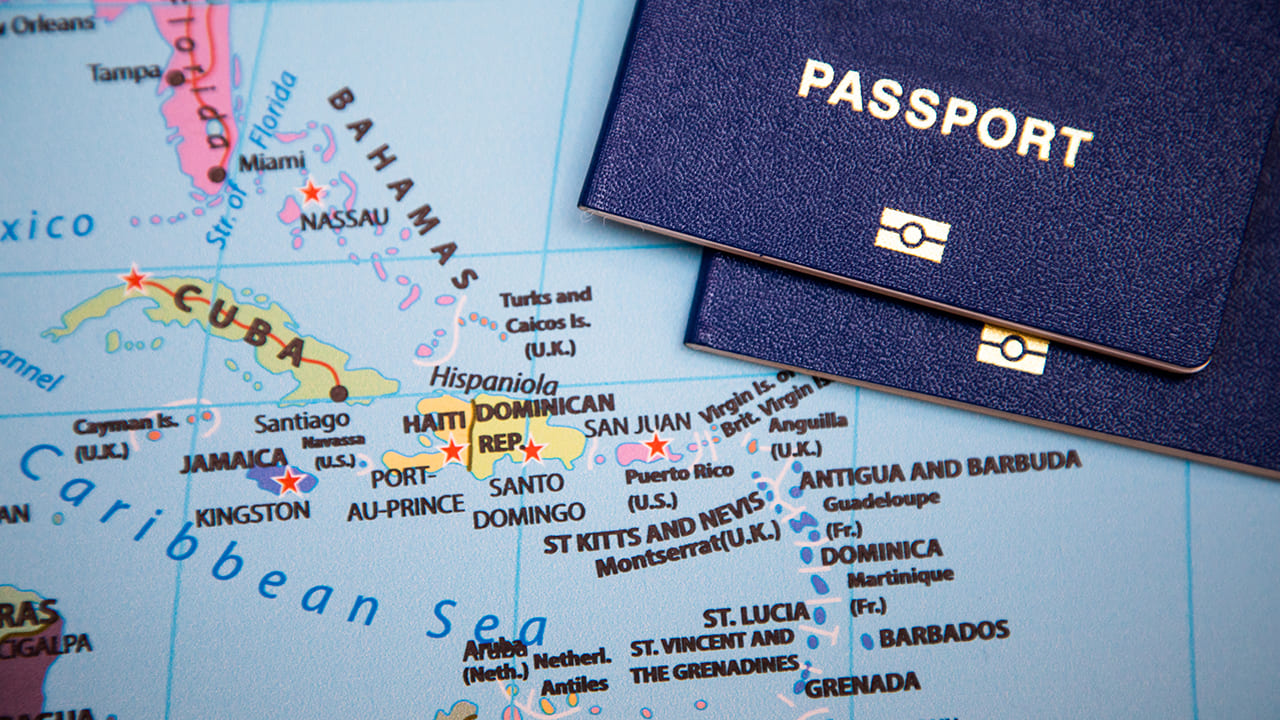
In 2025, the Caribbean remains one of the most efficient regions in the world for obtaining second citizenship through real estate investment. Across Antigua and Barbuda, Grenada, Dominica, Saint Kitts and Nevis, and Saint Lucia, investors can secure a passport by purchasing government-approved property or shares in licensed development projects.
The minimum entry threshold starts from $200,000, processing typically takes 4-6 months, and ownership requirements range from 3 to 5 years depending on the country.
A key advantage: property purchased under these programs can be resold after the mandatory holding period, often with capital appreciation due to strong demand and limited supply.
Explore a real case study of how Astons helped a family obtain Dominican citizenship through real estate.
| Country | Minimum investment (1 applicant) | Processing time | Visa-free countries | Family members in application | Unique feature | Resale of property |
|---|---|---|---|---|---|---|
| Antigua and Barbuda | $230 000 | 8 months | 151 | Spouse, children, parents, siblings | One family member receives a university scholarship | After 5 years |
| Dominica | $200 000 | 4–5 months | 135 | Spouse, children, parents, grandparents | Most affordable real estate among Caribbean programs | After 3 years |
| Grenada | $235 000 | 6 months | 148 | Spouse, children, parents, siblings | E-2 treaty with USA (eligible for business visa) | After 5 years |
| Saint Kitts and Nevis | $250 000 | 3–6 months | 154 | Spouse, children, parents | Oldest and most stable investment program | After 7 years |
| Saint Lucia | $240 000 | 10–12 months | 148 | Spouse, children, parents, siblings | Option to invest in refundable government bonds | After 5 years |
Caribbean citizenship by investment programs are among the fastest in the world. Depending on the country, a passport can be obtained in 3 to 12 months. The entire process is remote: submission of documents, due diligence, and passport issuance takes place without visiting the island.
Most programs allow the inclusion of a spouse, children, parents, grandparents, and in some cases (Grenada, Saint Lucia) siblings, making them ideal for multi-generational planning.
After obtaining a passport, there is no obligation to reside in the Caribbean or even visit the country. This is a key benefit for those who want a second citizenship without changing residence or tax status.
A Caribbean passport offers visa-free access to 135–155 countries, including Schengen Area, UK, Singapore, and Hong Kong. Grenada offers eligibility for the US E-2 investor visa, while Dominica and Grenada provide visa-free access to China.
All programs comply with international Due Diligence standards but guarantee strict confidentiality. Investor information is not published or shared with third parties without consent.
Caribbean countries offer one of the most investor-friendly tax systems in the world: no tax on foreign income, dividends, interest, or capital gains. There are also no inheritance taxes.

In October 2025, the European Parliament introduced a mechanism allowing temporary suspension of visa-free travel for countries with citizenship-by-investment programs. In response, Caribbean governments significantly strengthened oversight: raising investment thresholds, introducing biometric checks, and tightening Due Diligence.
To coordinate these reforms, Antigua and Barbuda, Dominica, Grenada, Saint Kitts and Nevis, and Saint Lucia created the Eastern Caribbean Citizenship by Investment Regulatory Authority (ECCIRA), a unified regulator overseeing all CBI programs.
ECCIRA will:
These reforms aim to safeguard visa-free travel, and as of now, all five Caribbean programs still maintain Schengen access. New regulatory standards are expected in 2026.
The best choice depends on your priorities: affordability, speed, tax planning, or access to the US market.
Best for investors seeking a cost-efficient, proven program.
Ideal for entrepreneurs targeting the US or Asian markets.
Suitable for family migration and education planning.
Best for investors prioritising speed and strong global reputation.
Ideal for those seeking lower risk and multiple investment formats.
To show how the process works in practice, here’s a real case study of a Bahraini couple whom Astons assisted in obtaining St. Lucia citizenship in only six months.
| Type of property | Approximate cost | Comment |
|---|---|---|
| Apartments / condominiums | from $200,000 | Most popular format for short-term rental. Often part of resorts with guaranteed 4–6% annual yield. |
| Townhouses / small homes | $400,000–600,000 | Popular among families. Usually near beaches or golf clubs. High liquidity on resale. |
| Villas 200–400 m² | $1,000,000–2,000,000 | Premium properties with ocean views. Often include private pool, solar system, and full management. |
| Premium villas (waterfront / marina) | from $3,000,000 | Highest capital appreciation (up to 10% per year). Highly demanded in Antigua and Saint Lucia. |
| Land plots / waterfront land | from $195,000 and up | Suitable for resorts and private residences. Important to consider restrictions for foreigners (ALHL). |
| Private islands | from $5,000,000 | Exclusive asset with low liquidity but high prestige. Purchases with crypto and eco-projects possible. |
Buying real estate through a Caribbean citizenship program is a streamlined, government-regulated procedure designed specifically for foreign investors. While each country has its own nuances, the overall process follows a clear and predictable sequence:
Step 1: Consultation and Program Selection
Only approved developments qualify for citizenship-by-investment.
Your advisor helps you select:
At this stage, you also determine the investment amount and the ownership structure.
Step 2: Document preparation
Once you’ve chosen the property:
This secures the unit or share while your citizenship application is prepared.
Step 3: Submit the Citizenship Application
Your property selection triggers the main part of the process:
You do not need to travel to the Caribbean to submit or complete the application.
Step 4: Receive Government Approval-in-Principle
If the CIU approves your application, you receive an Approval-in-Principle letter.
Only after receiving this approval are you required to complete the investment.
Step 5: Complete the Property Purchase
Following approval, you:
The developer issues a proof of ownership (title deed, share certificate, or similar document) depending on the program.

Step 6: Obtain Your Caribbean Passport
After the investment is verified:
The entire process, from reservation to passport takes approximately 3-6 months.
Step 7: Hold the Property for the Required Period
Caribbean programs require you to maintain ownership for 5-7 years, depending on the country.
After this period, you may resell the property, often to another investor seeking citizenship.
| Country | ALHL License | Stamp duty | Due Diligence | Program fee |
|---|---|---|---|---|
| Antigua and Barbuda | 2,5% | 2,5% | from $5,000 | from $30,000 |
| Grenada | 10% | none | from $5,000 | from $50,000 |
| Dominica | 10% | 4% | from $7,500 | from $25,000 |
| Saint Kitts and Nevis | 10% | none | from $10,000 | from $60,000 |
| Saint Lucia | $2,300–4,200 | 2% | from $7,500 | from $30,000 |
Important: Foreign buyers in Caribbean countries may need the Alien Landholding License (ALHL) — a special permit for land ownership. It is mandatory in Grenada, Dominica, Antigua and Barbuda, Saint Kitts and Nevis, and Saint Lucia, where it usually costs 2.5–10% of the property value.
Additional costs are moderate. Insurance — about 0.2% of property value annually. Utilities: from $83 in Grenada to $250 in Antigua and Barbuda. Property tax — 0.002–5% (Dominica — 1.25% municipal fee). There are no taxes on income, capital gains, or dividends, making property ownership especially profitable.
Applicants must have a legitimate employment contract with an Argentine company. Random inspections ensure compliance; fraudulent employment may lead to residency cancellation.
Granted in cases of proven political, ethnic, or other persecution. Processing takes 2–3 years. Every exit must be reported to immigration authorities.
Note: Medical treatment visas and Digital Nomad visas do not qualify as legal residency.
| Country | Average price per property (2025) | Rental yield (annual) | Advantages |
|---|---|---|---|
| Antigua and Barbuda | $250,000–300,000 | 4–6% | Demand for premium beachfront villas; limited land supply. |
| Grenada | $300,000–400,000 | 3–5% | Resort projects and marinas; moderate price growth. |
| Dominica | $200,000–300,000 | 4–5% | Focus on eco-resorts and sustainable projects; rising foreign transactions. |
| Saint Kitts and Nevis | $350,000–500,000 | 4-7% | High demand for ocean-view properties and apartments in approved projects. |
| Saint Lucia | $300,000–400,000 | 3–5% | Growth in premium segment; limited waterfront land. |

Many Caribbean states do not tax rental income, capital gains, or dividends. This allows investors to retain the full yield from their assets. In favourable locations, returns can reach up to 8% annually without tax deductions.
Tourism in the region continues to recover quickly. In 2025, hotel and apartment occupancy rose by 12-15%, making short-term rentals one of the most profitable strategies. Apartments and managed resort units typically deliver stable cash flow and consistent occupancy.
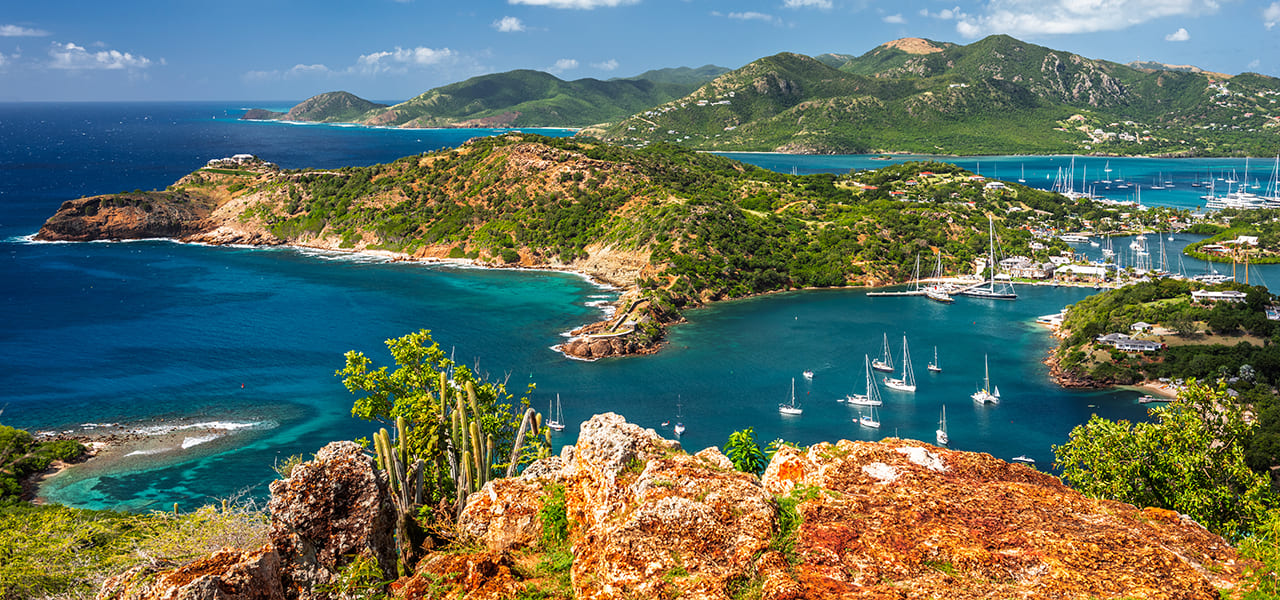
Eco-resorts, beachfront villas, and residence in high-demand tourist zones such as Rodney Bay, Grand Anse, and English Harbour show the strongest capital appreciation, reaching up to 10% per year. Limited supply of quality beachfront properties further supports price growth.
Periods of lower interest rates and large-scale infrastructure development provide favourable entry points. Islands such as Grenada and Saint Lucia continue expanding hotel zones, marinas, and transport hubs, which supports both rental performance and long-term asset appreciation.
Check whether an Alien Landholding License (ALHL) is required. It is mandatory in Anigua and Barbuda, Grenada, and other islands if the property is purchased outside a citizenship program.
Confirm that the project is approved, the minimum holding period (3-7 years), and what documents are required to verify the source of funds.
Prioritise areas with good access to airports, marinas, and major resorts. These locations typically see stronger price growth and higher rental demand. Also consider the reliability of electricity, water supply, and internet. On some islands, these factors directly affect long-term liquidity.
A licensed agent can help identify compliant projects, review title documents, and avoid properties with hidden risks. For waterfront homes, a structural inspection is recommended to assess resistance to hurricanes, humidity, and erosion.
In markets like Saint Lucia and Grenada, eco-friendly villas equipped with solar panels, desalination, and rainwater systems are increasingly in demand. Such properties have lower operating costs and typically achieve 5-10% higher resale value. Government incentives for renewable energy reinforce this trend.
Short-term rentals can yield up to 8% annually with occupancy rates of 60-70%. In manager resorts, income is often shared 50/50 with the operator. Before purchasing, calculate expected ROI, management costs, and potential resale commissions to understand the long-term financial outcome.

 Learn more
Request a Free Consultation
Our specialists will calculate potential profitability, explain legal and regulatory details, and provide full transaction support at every stage, from project selection to passport acquisition.
Send a RequestAuthor

Susanna Uzakova
Senior Citizenship & Residency Advisor
Suzanna Uzakova is an international specialist and a leading expert at the company in the field of investment immigration.
Learn more about the authorShare


Related Articles
schedule a Meeting
Let’s Discuss the Details
Our expert will create a tailored solution based on your needs within 24 hours.

Susanna Uzakova
Senior Citizenship & Residency Advisor
 Your Data is Protected
Your information is handled under strict privacy policies.