

































 +44 207 043 6026
  +357 252 30233
  +971 454 01311
  +902 129 008 710
  +302 112 340 656
  +1 (888) 2033901


How to Get a O-1 USA Visa in 2026
-
 19-minute read
 -
1,143 views
-
Share
 19-minute read
 1,143 views
 Share
Share
Alena Lesina
Senior Citizenship & Residency Advisor, Head of U.S. Office
- Last edited: May 26, 2026
The US O-1 talent visa allows professionals with extraordinary achievements in business, science, sports, arts and entertainment to legally live and work in the United States for up to 3 years with unlimited extensions. Unlike many other US visa categories, the O-1 visa has no annual quota and can become a pathway toward permanent residency through the EB-1 category. However, approval requires strong evidence of international or national recognition, a properly prepared petition and clearly defined professional plans in the US.
In this guide, we explain who can qualify for a US O1 visa in 2026, what achievements may meet the requirements, how the application process works, what documents are needed and what difficulties applicants may face during the process.

The O-1 visa is a special category of nonimmigrant visa granted to foreigners with extraordinary achievements in science, culture, sports or business. It is often referred to as a “talent visa.” The program attracts highly qualified professionals and remains one of the most popular US visa categories. It is expected that the visa holder will work in the United States in the same field where they have achieved recognition and success.
The applying applicant must meet the O-1 visa criteria by proving extraordinary ability and demonstrating significant professional achievements. Entrepreneurs are also eligible to participate in the program. Every year, around 16,000 O-1 visa holders enter the United States from around the world.
The program has several important features:
The O-1 visa itself does not directly lead to a green card or US citizenship. However, after relocating to the United States and gaining substantial professional recognition, applicants may later qualify for permanent residency through the EB-1 immigrant visa category. The requirements for EB-1 are similar to those for O-1.
The visa has several categories:
Exceptional skills or outstanding achievements must be recognized by experts in the relevant field. Evidence may include international awards, grants, media publications, membership in prestigious associations and other proof showing the applicant’s professional recognition.
The petition cannot be filed independently by the applicant. Instead, it must be submitted by a US employer, a US agent or a foreign employer through a US agent. This is one of the major differences between O-1 and certain immigrant visa categories where self-petitioning is allowed.
Entrepreneurs, including startup founders, may also participate in the program. A realistic business plan for a new company may serve as evidence of entrepreneurial talent.
There are also other US visa options for entrepreneurs, including the EB-5 and E-2 visas. These allow foreign nationals to live in the US and operate businesses there. The EB-5 visa is considered one of the fastest paths to obtaining a green card and eventually US citizenship. It also allows investors to relocate together with their family members.
The nonimmigrant E-2 visa is available only to citizens of countries that have signed a trade treaty with the United States.
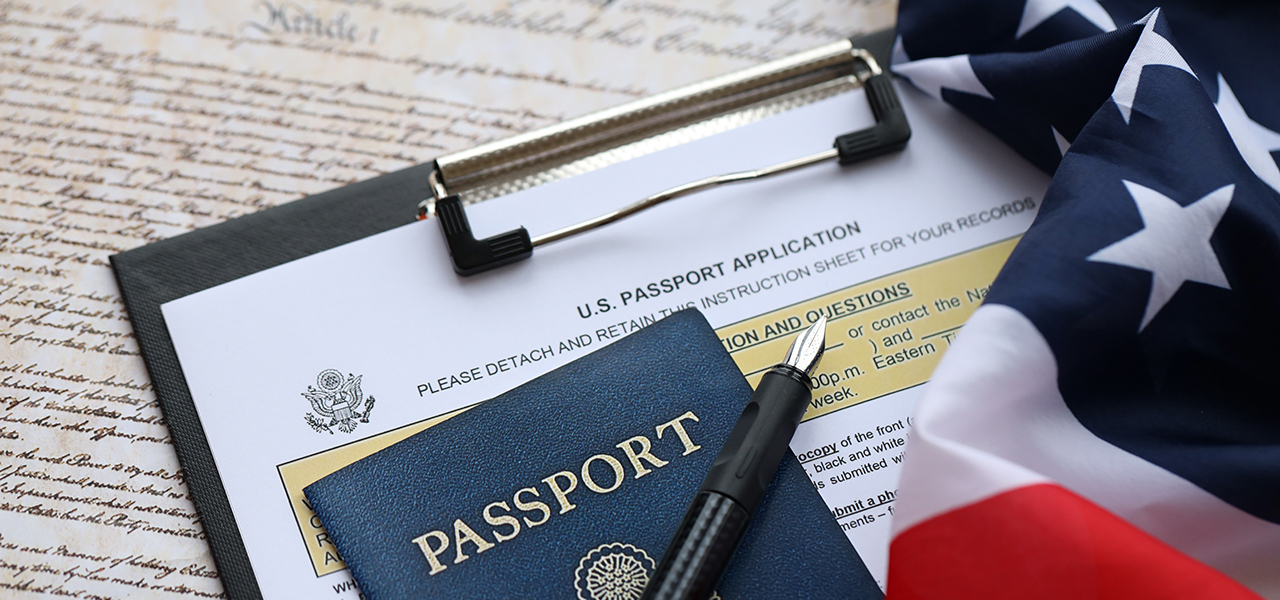
US immigration law clearly outlines which achievements may serve as proof of extraordinary ability.
For applicants under the “general” O-1A category, the following criteria apply:
If the standard criteria do not fit a specific profession well, applicants may provide comparable evidence demonstrating recognition in their field.
For “creative” O-1B applicants, the requirements are similar:
High compensation compared to other top earners in the industry, supported by contracts or additional documentation

Obtaining this visa is a complex process that requires thorough preparation. However, if all O1 visa requirements are met and extraordinary ability can be convincingly demonstrated, approval is possible.
Below is the general process and list of documents typically required for a successful application.
The applicant must collect documents proving professional recognition: awards, publications, contracts, recommendation letters, proof of participation in judging panels, salary information, evidence of commercial success and scientific or business contributions.
For O-1 applications, it is important not only to provide strong individual evidence but also to create an overall picture of sustained recognition and continued work in the same field in the United States.
Most petitions also include an advisory opinion from a professional association, labor organization, employer or expert in the relevant field.
A lawyer, employer or agent must file Form I-129 with US Citizenship and Immigration Services (USCIS) on behalf of the applicant. The petition must include evidence of extraordinary ability.
The petition may be submitted no earlier than one year before the intended start of employment.
In 2026, the standard USCIS filing fee for Form I-129 for O petitions is $1,055, while small employers and nonprofit organizations pay a reduced fee of $530.
USCIS processing may take several months. Premium processing is available within 15 days for an additional fee of $2,965.
In many cases, USCIS requests additional evidence. Professional legal assistance is highly recommended, as the quality of the documentation significantly affects the outcome and timing.
The standard document package includes:
Applicants may also provide employment contracts or written summaries of verbal agreements with US employers. Entrepreneurs should provide project details or a business plan.
Before attending the visa interview, applicants must complete the online DS-160 form through the US Department of State website.
The consular fee for the O-1 visa is $205. The fee must be paid after submitting the DS-160 form.
The fee is non-refundable, even if the visa is denied or the interview is missed.
After payment, applicants may schedule an interview at the embassy or consulate.
During the interview, applicants must demonstrate the level of their professional qualifications and explain the purpose of their work in the United States.
If a translator is needed, applicants should notify the consulate in advance.
An approved USCIS petition alone does not guarantee visa issuance. The consular officer independently evaluates the applicant, documentation and grounds for travel.
Embassies usually process O-1 visa applications within 2–3 months. Under premium processing, the USCIS stage takes 15 days, although consular timelines may still vary.
If additional documents are not requested and the decision is positive, the applicant may receive the visa at the embassy or consulate.
O-1 visa holders may be admitted to the US up to 10 days before the start date of the approved petition and remain up to 10 days after its expiration.
However, employment is permitted only during the authorized petition period. Working during the additional 10-day grace periods is not allowed.
Although the concept of “extraordinary ability” may seem broad, in practice the requirements for applicants are often very strict.
Even obtaining an approved petition from USCIS does not guarantee visa issuance. Consular officers frequently conduct additional background checks, including reviewing publicly available information online. If officers cannot find meaningful evidence of the applicant’s professional recognition, the petition may be returned for reconsideration.
It is not enough to simply be “extraordinary” — the applicant must prove it comprehensively. This means providing extensive documentation demonstrating genuine recognition in the field. Immigration authorities place responsibility for collecting and presenting evidence on the applicant and may verify the authenticity of submitted materials.
Applicants should carefully consider which evidence to provide and ensure it is convincing. For example, membership in organizations that accept anyone for a fee may carry little weight. Likewise, publications in regional newspapers or obscure media outlets may not be persuasive enough.
Challenges may also arise regarding the applicant’s achievements themselves. Immigration officers often consider how recent and relevant those accomplishments are: the more current the achievements, the stronger the case.
Limited international recognition may also become an issue if the applicant is successful domestically but relatively unknown abroad. Salary levels may also be evaluated — compensation should be considered high not only within the applicant’s home country, but also in comparison with international industry standards.
The applicant’s work plans in the United States must also be convincing. Consular officers may question cases where, for example, a highly decorated athlete intends to work as a school coach or a renowned scientist plans to provide private tutoring.
Professional activities in the US should already be clearly defined at the petition stage. A loosely structured freelance model or undefined creative exploration is generally not suitable for O-1 status. Applicants are expected to demonstrate concrete agreements, projects or planned events in the United States.
The information provided above is for informational purposes only. Astons specialists do not assist with US O-1 talent visa applications but do provide advice regarding the EB-5 visa and investment programs that allow applicants to obtain residency or citizenship in different countries. More details are available during a free consultation.

 Learn more
Request a Free Consultation
Book a free consultation today and let our specialists help you choose the best country for your family
Send a RequestAuthor

Alena Lesina
Senior Citizenship & Residency Advisor, Head of U.S. Office
Alena Lesina is an international specialist and a leading expert at the company in the field of investment immigration.
Learn more about the authorShare


Related Articles
schedule a Meeting
Let’s Discuss the Details
Our expert will create a tailored solution based on your needs within 24 hours.

Susanna Uzakova
Senior Citizenship & Residency Advisor
 Your Data is Protected
Your information is handled under strict privacy policies.