
































 +44 207 043 6026
  +357 252 30233
  +971 454 01311
  +902 129 008 710
  +302 112 340 656
  +1 (888) 2033901


How to Get Argentine Citizenship in 2026
-
 10-MINUTE READ
 -
3,873 views
-
Share
 10-MINUTE READ
 3,873 views
 Share
Share
Susanna Uzakova
Senior Citizenship & Residency Advisor
- Last edited: April 29, 2026
Argentine citizenship can be acquired by origin or by naturalisation. Citizenship by origin applies to individuals born in Argentina or born abroad to Argentine parents. Foreign nationals may obtain citizenship through naturalisation after 2 years of legal residence in the country. In practice, many foreigners first obtain residency through routes such as family reunification, work, study, or marriage to an Argentine citizen, and then apply for citizenship once they meet the residence requirement.
In addition to the traditional routes, Argentina is preparing to introduce an investment-based pathway to citizenship, aimed at attracting foreign funds to key sectors of the economy.
The sections below outline the main pathways to Argentine citizenship and the practical steps involved in the application process.

In May 2025, Argentine President Javier Milei issued Decree 366/2025, which significantly revised immigration policy.
Argentina was long considered one of the most flexible countries in terms of migration policy. However, in May 2025, the new President of Javier Milei signed Decree 366/2025, which significantly tightened the rules. In 2026, amendments to the migration law began to be enforced in practice.
Now, all foreigners, regardless of the grounds on which they plan to obtain citizenship, must reside in Argentina for 2 years in legal status (temporary or permanent residence) without leaving the country. Any departure resets the residency period. Previously, there was no such restriction on travel or requirement to maintain legal status.
Exception: the upcoming investment citizenship program (covered below).
A second major change is that citizenship applications are no longer reviewed by courts, but instead by Argentina’s National Migration Service (Migraciones).
The decree came into force immediately. However, a bureaucratic issue arose: in early 2026, Migraciones officially stated that procedures for processing citizenship applications had not yet been established, and submitted applications are currently not being reviewed.
Cases of foreigners who managed to submit their documents to the courts before the May 2025 decree continue to be processed under the previous rules.
Argentina has tightened border controls due to abuse of its visa-free regime. There have been cases of entry refusal based on suspicion of “false tourism.”
This category may include:
There are reported cases where such individuals are immediately returned to their country of departure directly from border control.
Tourists entering Argentina are now expected to have:
If a migration officer suspects immigration intent, entry may be denied.
Although Argentine law allows changing tourist status to residency from within the country, lawyers advise not disclosing immigration intentions at the border.
In 2026, Argentina’s Federal Police conducted the first large-scale raids in modern history targeting irregular migrants.
In January 2026, the Minister of Security reported to Infobae that over a two-month period, around 5,000 foreigners were either deported or denied entry into the country.
The president also announced a new investment citizenship program, expected to launch by 2027 or even later. Preliminary information, which is yet to be confirmed, suggests investments start at $500,000 and can be made in key sectors such as energy, agriculture, technology, and tourism.
Decree 524/2025 establishes that investors must apply to the new Investment Citizenship Agency under the Ministry of Economy.
The process will begin once the qualifying investment has been made. Authorities will review the application, verify the investment, and conduct standard background and compliance checks using information from relevant government sources.
After the assessment is completed, approved applications will be forwarded to the competent migration authorities for the issuance of a naturalisation certificate. This document enables successful applicants to obtain Argentine identification documents and a passport.
Importantly, investors do not need to reside in Argentina to obtain or maintain citizenship.

Children born in Argentina automatically receive an Argentine passport — this is known as jus soli (right of the soil). Children of Argentine citizens born abroad are also entitled to citizenship without additional conditions.
Foreign nationals can apply for naturalisation (citizenship) in Argentina if they:
After meeting these requirements, applicants must submit documents to the Argentine Migration Office (Migraciones).
As of 2026, submitting citizenship applications has become more complicated due to bureaucratic changes. Previously, citizenship cases were handled by courts, but the president transferred this responsibility to the Migration Office, which was not prepared for such a volume of applications. The system for processing documents is still being developed, although applications can already be submitted online via the official website.
Required documents for a citizenship application:
All foreign documents must be apostilled, translated into Spanish by an accredited translator, and certified by the relevant translation board.
In 2026, Argentina offers residence permits for family reunification, retirees or passive income earners, students, workers, and refugees. Each type has specific requirements, such as proof of income, enrollment in accredited programs, or employment in the country. Residency can be obtained within 90 days of entering the country without a visa.
Previously, residence permits could sometimes be issued even with an expired status (illegal stay), but rules have now tightened. While deportation cases are still rare, it’s always recommended to act within legal boundaries to avoid risks.
This status is granted to parents of newborn Argentine children and spouses. Eligibility requires proof of the relationship (birth or marriage certificate).
For holders of stable income from abroad (rental income, dividends, investments, pensions, etc.). Applicants must show documents proving the right to receive passive income and monthly deposits to an Argentine bank account. The name of the sender must match what is stated in the contract.
The program is tied to the minimum wage in Argentina. At the moment, applicants must demonstrate income equal to 5 minimum wages per person, which is about $1,260 (as of March 2026, 1 minimum wage is 352,400 pesos, or approximately $252).
For a family of three, the required passive income is 15 minimum wages (around $3,775).
The minimum wage is regularly adjusted, and if your income no longer meets the updated threshold in the following year, your residence permit may not be renewed.
One of the most in-demand residence permit options for those who have not had a child in Argentina is the student residence permit. To obtain it, you must enroll in a private or public educational institution in Argentina in a program lasting at least three years.
It is important that the program is accredited by the Argentine Ministry of Education. Programs of a shorter duration, or those without approved accreditation, only grant a so-called temporary stay permit — a document that allows you to remain in the country but does not provide residency rights and does not count toward official years of residence.
A student residence permit can be obtained not only through universities, but also through colleges, senior years of school (for minors — adult evening school does not qualify), and tertiary institutes (something between a college and a university).
Another challenge is that starting from 2026, admission to public universities requires a certified Spanish language level of B2–C1. However, this requirement does not apply to private paid institutions.
Requires official employment with an Argentine company. Presence at the workplace may be verified several times a year; if you are absent, the permit can be revoked.
Granted due to political, ethnic, or other persecution. Provides access to work, education, and healthcare. Each exit from Argentina must be reported to migration authorities. Processing may take 2–3 years.

Applicants must provide apostilled, translated (by an accredited translator), and certified documents:
Within Argentina, proof of residence (domicilio) is required. To obtain it, present a rental contract at the local police office. Some neighborhoods require two Argentine witnesses to confirm your address.
Applications are submitted online via the Migration Office website. Fill out the applicant form and attach scanned documents in PDF format.
It is important to correctly attach family members in the application form; missing members may cause delays of several weeks. If prompted about including additional family members, select “yes” if you haven’t added them yet.
After submission, receipts must be paid:
Prices are per person. After payment, you will receive an invitation for in-person submission at the Migration Office to show originals and provide biometric data.
The application review process takes from one month to one year, with an average timeframe of around 4 months. Once approved, the residence permit card (DNI — national ID card) is delivered by post to the address указан in the application. You will need proof of fee payment to receive it, so keep all receipts.
If you move or miss the delivery, you can collect your DNI later at the Renaper Civil Registry office.
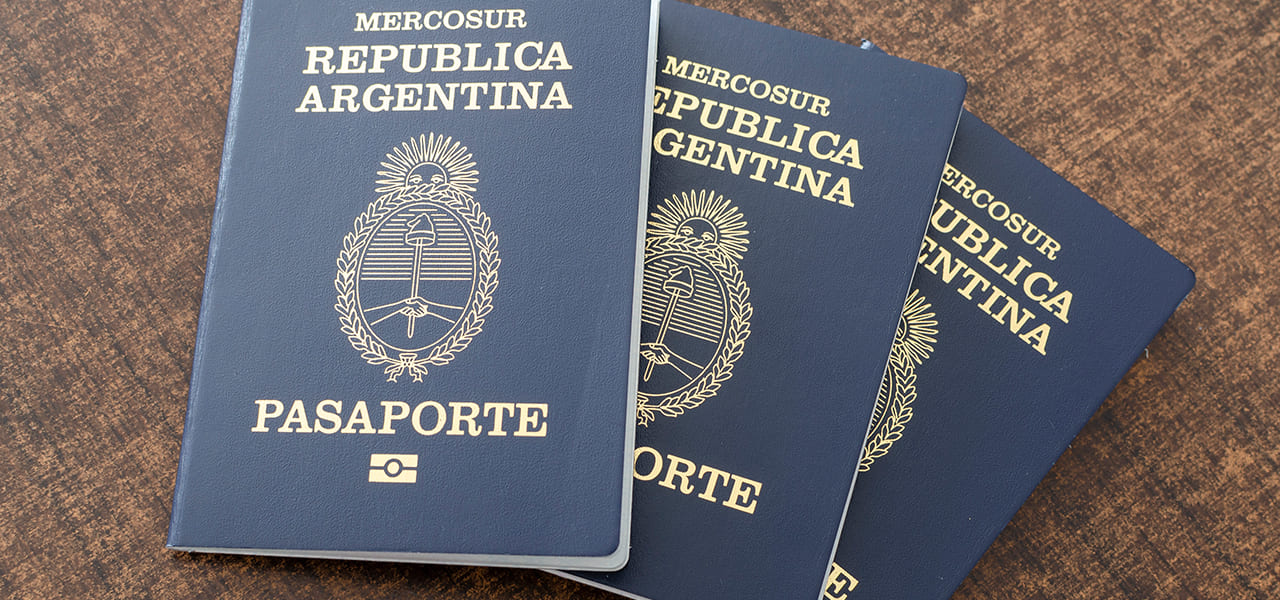
1. Fast track to citizenship
Just two years of continuous legal residence with a temporary or permanent residence permit are enough to apply for citizenship. This remains one of the fastest options globally: for comparison, Greece requires 7 years of residence, and Turkey 5 years. A citizenship-by-investment program without relocation requirements has also been discussed for the future.
2. Dual citizenship allowed
Argentina doesn’t require applicants to renounce their original citizenship. This allows individuals to hold two passports and move freely between countries.
3. Affordable cost of living
According to Numbeo, monthly expenses for one person start from around $500, plus rent from approximately $400.
4. High-quality healthcare
Argentina ranks among the leading countries in Latin America for healthcare quality, offering modern clinics, specialised doctors, and relatively affordable services. Permanent residents can access public healthcare, while others are advised to obtain private insurance.
5. Welcoming society
Argentinians are known for their openness and willingness to help. A positive attitude toward immigrants is supported at the legislative level. Many residents are descendants of European immigrants, which makes adaptation easier.
6. Diverse climate
Argentina offers a wide range of climates — from tropical to temperate and even subarctic regions. In Buenos Aires, winters are mild (+8 to +15°C), while summer temperatures can reach +35°C.
7. Visa-free travel
Holders of an Argentine passport can travel visa-free to around 170 countries.
Processes are becoming more digital but are often slow and inconsistent, with differences between provinces and varying interpretations of regulations.
In recent years, inflation has reached triple-digit levels, and the national currency remains unstable, although the situation began stabilizing in 2026.
There is a relatively high level of petty theft and street crime.
Argentina is geographically remote from most global hubs: flights to Europe typically take 13–16 hours, often with at least one connection. Travel to North America usually takes 10–12 hours, while routes to Asia or the Middle East can exceed 20 hours with multiple layovers.
Although English is taught in schools, many locals do not speak it even at a basic level, making Spanish important for daily life.
The country is currently undergoing rapid reforms and changes in political direction.
Argentine citizenship cannot be voluntarily renounced. Applicants are informed of this before starting the naturalization process. Citizenship can only be revoked in serious cases, such as fraud or actions considered harmful to the state.
Regarding taxes: if an Argentine citizen lives abroad for more than 183 days and loses tax residency, they are only taxed on Argentine-sourced income and property in Argentina.
Astons specialists have extensive experience with global residence and citizenship by investment programs. Book a free consultation — our experts will review your case and help you choose the option that best suits your goals.

 Learn more
Request a Free Consultation
Book a free consultation today and let our specialists help you choose the best country for your family
Send a RequestAuthor

Susanna Uzakova
Senior Citizenship & Residency Advisor
Suzanna Uzakova is an international specialist and a leading expert at the company in the field of investment immigration.
Learn more about the authorShare


Related Articles
schedule a Meeting
Let’s Discuss the Details
Our expert will create a tailored solution based on your needs within 24 hours.

Susanna Uzakova
Senior Citizenship & Residency Advisor
 Your Data is Protected
Your information is handled under strict privacy policies.