Brazilian citizenship can be obtained through birthright, descent, marriage or naturalization after a period of legal residence in the country. In most cases, foreigners first get residency and later apply for citizenship after meeting the required residence period, language requirements and other legal conditions. Brazil also allows dual citizenship and offers one of the strongest passports in Latin America, with visa-free access to 168 countries, including the Schengen Area and Japan.
In this guide, we explain who can qualify for Brazilian citizenship in 2026, how the naturalization process works, what documents are required and which residency pathways may lead to a Brazilian passport.
The article is provided for informational purposes only. Astons does not assist with getting Brazilian residency or citizenship but may help with residency and citizenship by investment through existing international programs. Contact our specialists for a detailed consultation.
Key Takeaways
- Brazilian citizenship can be obtained through birth, descent, marriage or naturalisation
- The standard residency requirement for naturalization is 4 years, although it may be reduced to 1 or 2 years in certain cases
- Brazil allows dual citizenship, so applicants are generally not required to renounce their existing passport
- Children born in Brazil automatically receive citizenship under the jus soli principle
- Spouses of Brazilian citizens and parents of Brazilian children may qualify for accelerated naturalization after 1 year
- Applicants must demonstrate Portuguese language proficiency and provide proof of legal residence
- The naturalization process is handled online through the official Naturalização platform
- Brazil offers multiple residency pathways, including investment, employment, digital nomad, retirement and family reunification options
General Requirements for Future Brazilian cCitizens

Citizenship for foreigners in Brazil is regulated by the Constitution and the Immigration Law. Applications are submitted through the official Naturalização online platform. Since 2020, this has been the main channel for filing applications, tracking cases, receiving notifications and uploading additional documents.
To obtain citizenship, an adult applicant must:
- Have a legal basis for residence in Brazil. There are multiple residency pathways available, including an investment program, which we discuss separately in this article
- Reside in the country for the legally required period. The standard naturalization period is 4 years. In some cases, it may be reduced to 1 or 2 years. Brazil also offers extraordinary naturalization after 15 years of residence without a criminal record
- Have no outstanding criminal convictions
- Demonstrate knowledge of the Portuguese language. This can be proven through a CELPE-BRAS certificate, Brazilian educational documents or other documents accepted by the
- Ministry of Justice. CELPE-BRAS is the official Portuguese language exam for foreigners and is held both in Brazil and abroad
- Provide documents confirming identity, residency status and duration of residence
If all documents are correctly submitted and the requirements are met, a Brazilian passport is usually issued within 180 days after the start of the procedure. Applicants are not required to renounce their existing citizenship.
Ways to Get Brazilian Citizenship
By Birthright
Brazil applies the principle of jus soli — right of the soil. This means that a child born in Brazil automatically becomes a Brazilian citizen by birth.
After the child is born, a birth certificate must be issued. The first birth registration in Brazil is free of charge. Parents may apply through a cartório — the civil registry office — or complete the registration at the hospital if this service is available there. Parents usually need identification documents and the Declaração de Nascido Vivo — a medical birth declaration.
Parents of a Brazilian citizen child may obtain residency through family reunification and later qualify for accelerated naturalization. This reduces the standard residency requirement to 1 year. However, total absence from Brazil during this year cannot exceed 3 months.
Important: siblings of the newborn child do not automatically receive “temporary citizenship.” Provisional naturalization applies to foreign minors who moved to Brazil and lived in the country before the age of 10. After adulthood, this status can be converted into permanent naturalization within 2 years.
By Descent
Brazilian citizenship may also be obtained by descent if at least one parent is a Brazilian citizen.
According to the Constitution, a child born abroad may still be recognized as a Brazilian citizen by birth if one parent is Brazilian.
One of the following conditions must be met:
- The Brazilian parent was abroad on official government service
- The child’s birth was registered at a Brazilian consulate or another authorized authority
- The child later moved to Brazil and, after reaching adulthood, confirmed the intention to retain Brazilian citizenship
Individuals who previously lost Brazilian citizenship may also apply for its restoration in certain cases.

By Marriage
Marriage to a Brazilian citizen allows foreigners to apply for citizenship through accelerated naturalisation after 12 months of marriage. The marriage does not need to be concluded in Brazil, but it must remain valid at the time citizenship is granted.
Before applying for citizenship, the foreign spouse usually obtains residency through family reunification. Authorities may verify whether the marriage or stable partnership is genuine if doubts arise.
For the 1-year accelerated naturalisation period, the applicant’s total absence from Brazil cannot exceed 3 months.
Standard Naturalisation Procedure
Standard naturalization is available to adult foreigners who hold residency permits, have lived in Brazil for the required period, speak Portuguese and have no criminal record.
The standard residency requirement is 4 years. During this period, total absence from Brazil cannot exceed 1 year.
The required period may be reduced:
- To 1 year for applicants with a Brazilian citizen child, spouse or stable partnership with a Brazilian citizen, as well as citizens of Portuguese-speaking countries under certain conditions
- To 2 years for specific categories, such as recognized stateless persons, applicants who made significant contributions to Brazil or individuals with outstanding professional, scientific, artistic or sporting qualifications
Brazil also offers extraordinary naturalisation for foreigners who have lived in Brazil for at least 15 years without a criminal record.
In addition, provisional naturalisation exists for children or teenagers who moved to Brazil before the age of 10. After reaching adulthood, this status must be converted into permanent naturalization within 2 years.
Brazilian Citizenship Application Process
Naturalization applications are submitted online through the Naturalização system. Applicants complete the form, choose the type of naturalisation, upload PDF documents and receive notifications through the platform.
After submission, the Federal Police and Ministry of Justice review the documents. Applicants are then invited to provide original documents and biometric data such as photographs and fingerprints. In some cases, interviews or additional verification procedures may be required, although home visits are not mandatory for every application.
If approved, the applicant receives citizenship after the completion of the naturalisation process.
The application itself is not subject to a government fee in Brazil. The passport is issued separately after citizenship is granted. The standard fee for a Brazilian passport is R$257.25, although in some cases it may reach R$514.50.
If naturalization is denied, the applicant may file a recurso — an administrative appeal — within 10 days of receiving the refusal notice. Notifications are usually sent electronically, and appeal decisions are published in the official Diário Oficial da União publication. Additional appeals after the final decision are not available.
Required Documents for Obtaining Brazilian Citizenship

All foreign documents must be apostilled and officially translated into Portuguese.
Applicants will generally need the following:
- Resident card or residence permit
- CPF — the Brazilian individual taxpayer registration number. Without it, opening a bank account in Brazil is generally impossible. It can be obtained through the tax authority website or at state banks
- Criminal record certificates issued by the Brazilian Federal Court and the state justice authority. These are issued in the region where the applicant officially lived during the last 4 years. If the applicant has a spent conviction, proof of rehabilitation is required
- Criminal record certificate from the applicant’s country of origin. This is not required for recognized refugees or stateless persons
- Documents proving residence in Brazil during the legally required period. Examples include rental agreements and utility bills
- Valid passport
- Document proving Portuguese language proficiency
- Certificate from a consulate or embassy in Brazil confirming the correct spelling of the applicant’s name if discrepancies exist in translated documents
- Documents confirming eligibility for accelerated citizenship, if applicable, such as a marriage certificate with a Brazilian citizen, a Brazilian child’s birth certificate or a Ministry of Justice certificate confirming a significant contribution to the country
- Receipt confirming payment of the passport issuance fee
Grounds for Obtaining Brazilian Residency
For most foreigners, residency is the first step toward naturalisation in Brazil.
Residence permits may be obtained on several grounds:
- Employment or scientific activity: suitable for foreigners who received an offer from a Brazilian employer, participate in research projects or carry out professional activities in the country
- Study or internship: available for applicants enrolled in a Brazilian university, educational program or internship
- Medical treatment: issued to applicants requiring long-term treatment in Brazil who can provide supporting documents from a clinic
- Investment: available through investments into Brazilian businesses or urban real estate.
- Minimum investment thresholds depend on the type of investment and region
- Retirement or passive income: suitable for retirees and applicants with stable regular income transferable to Brazil
- Digital nomad status: designed for remote professionals working for foreign employers or clients outside Brazil
- Family reunification: available to close relatives of Brazilian citizens or residents, including spouses, children, parents and other categories established by law
- Asylum: granted to individuals unable to safely return to their country due to persecution or other protected circumstances
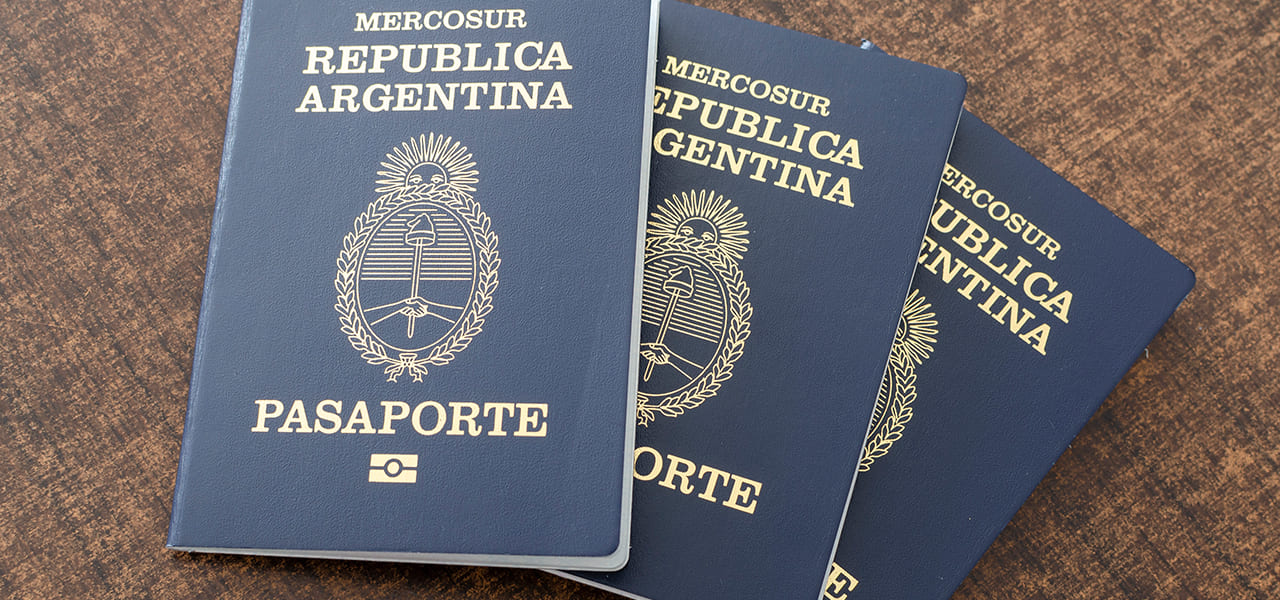
Latin America is also preparing to launch Argentina’s citizenship by investment program. The anticipated minimum investment threshold is around $500,000 into strategically important sectors of the economy. The program is expected to allow investors to obtain Argentine citizenship without mandatory residence in the country, include spouses and children in the application and benefit from visa-free access to more than 170 countries.
Conclusion
Brazil offers several pathways to citizenship, ranging from birthright and family connections to standard naturalization after legal residence. Compared to many other countries, the process can be relatively accessible thanks to flexible residency options, recognition of dual citizenship and reduced naturalization periods for certain categories of applicants.
At the same time, obtaining Brazilian citizenship still requires careful preparation. Applicants must maintain legal residency, comply with physical presence rules, prove Portuguese language proficiency and prepare a complete set of properly translated and legalized documents.
For many foreigners, the process begins with obtaining residency through work, investment, family reunification or other legal grounds. Over time, this may lead not only to a Brazilian passport, but also to broader mobility opportunities across Latin America and visa-free access to many countries worldwide.
 Learn more
Request a Free Consultation
Book a free consultation today and let our specialists help you choose the best country for your family
Send a Request


































 +44 207 043 6026
  +357 252 30233
  +971 454 01311
  +902 129 008 710
  +302 112 340 656
  +1 (888) 2033901


 16-minute read
  3,096 views
  Share
Share 













 Your Data is Protected